~ Linn Maung ~
The recent purges of some of the top politicians and People’s Liberation Army officers in China close to President Xi Jinping has been followed by the move of the Political Bureau of the Central Committee of the Chinese Communist Party to revitalize some of the institutions functioning under its Central Committee.
Coming in the wake of a series of articles in the PLA Daily, the mouthpiece of the People’s Liberation Army, advocating collective leadership and internal democracy in decision-making, these are indications that President Xi is under pressure to delegate some of his vast powers to his deputies, China watchers say. All the four articles in the PLA Daily criticized President Xi’s principle of centralized authority.
President Xi is facing difficult times at home because of the prolonged downturn of the Chinese economy. The growth rate of the Chinese economy has come down to around five percent from the double-digit figures recorded in previous decades. The housing sector, the main driver of the economy, is facing a collapse. The tariff war with the US is taking a heavy toll on business in China.
President Xi himself has presided over the meeting of the politburo in which the functioning of the institutions and commissions under the Central Committee has been reviewed. These institutions improve coordination with government departments so directives of the Central Committee are implemented.
According to a Xinhua report, it was stressed in the meeting that these institutions should exercise more leadership and coordination over major tasks and focus on planning, discussing and overseeing these tasks. Over the years, these institutions have become moribund. The commission on economic reforms has not publicly met since August 2024. Communiqués are shorter, suggesting fewer decisions.
Xi has massive powers and, according to China observers, the politburo now seems to be signaling that some changes are on the horizon. According to them, symbolism and indirect language play an important role in how the CCP communicates with the Chinese people. Slogans and key phrases are the watchwords. At first glance, the call of the politburo for enhancing “policy coordination” and the “review process” of major tasks may appear to indicate that the party high command is seeking to ensure that local officials enforce the agenda of Beijing. But the statement that specialized bodies that exist within the CCP Central Committee, the powerful commissions that Xi loyalists now hold, should focus on “guidance and coordination over major initiatives” and “avoid taking over others’ functions and overstepping boundaries” is a veiled threat of the politburo against Xi holding on to too much power.
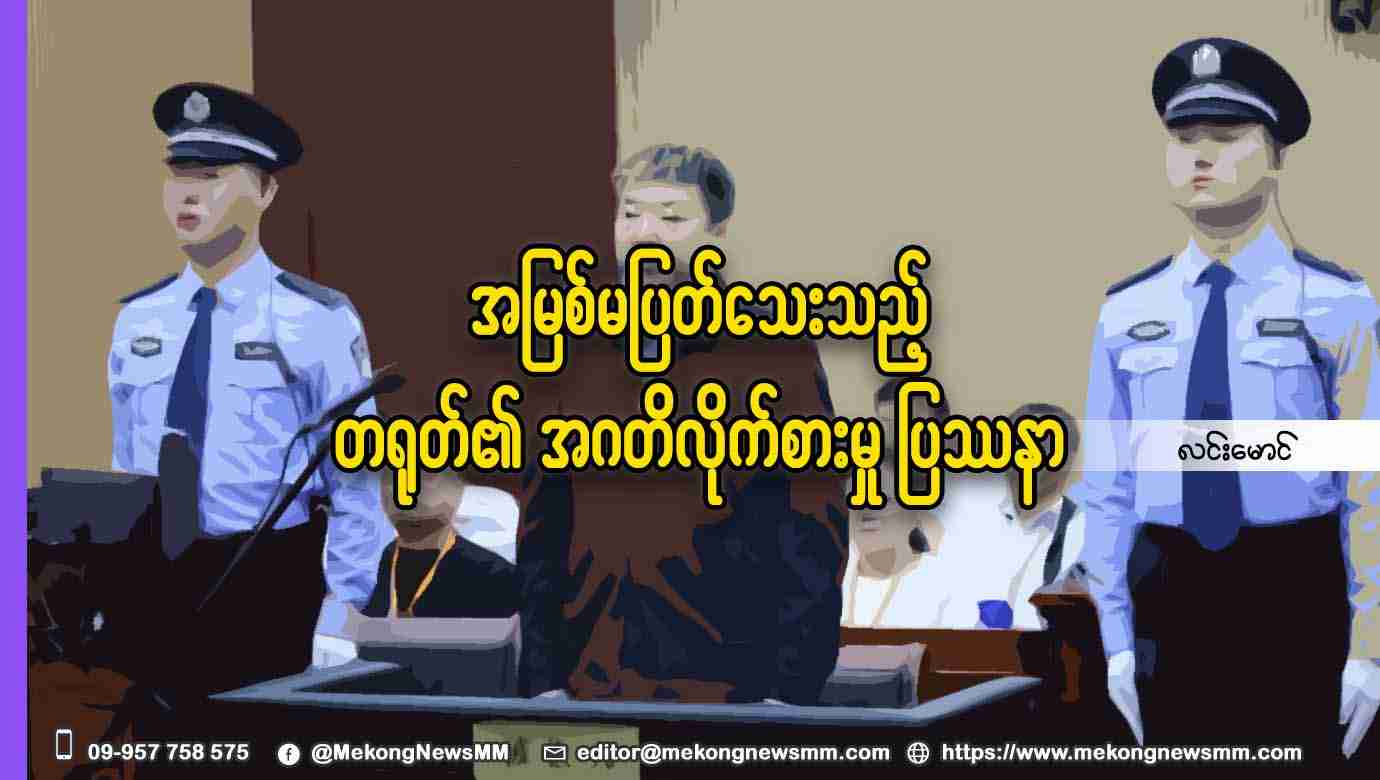
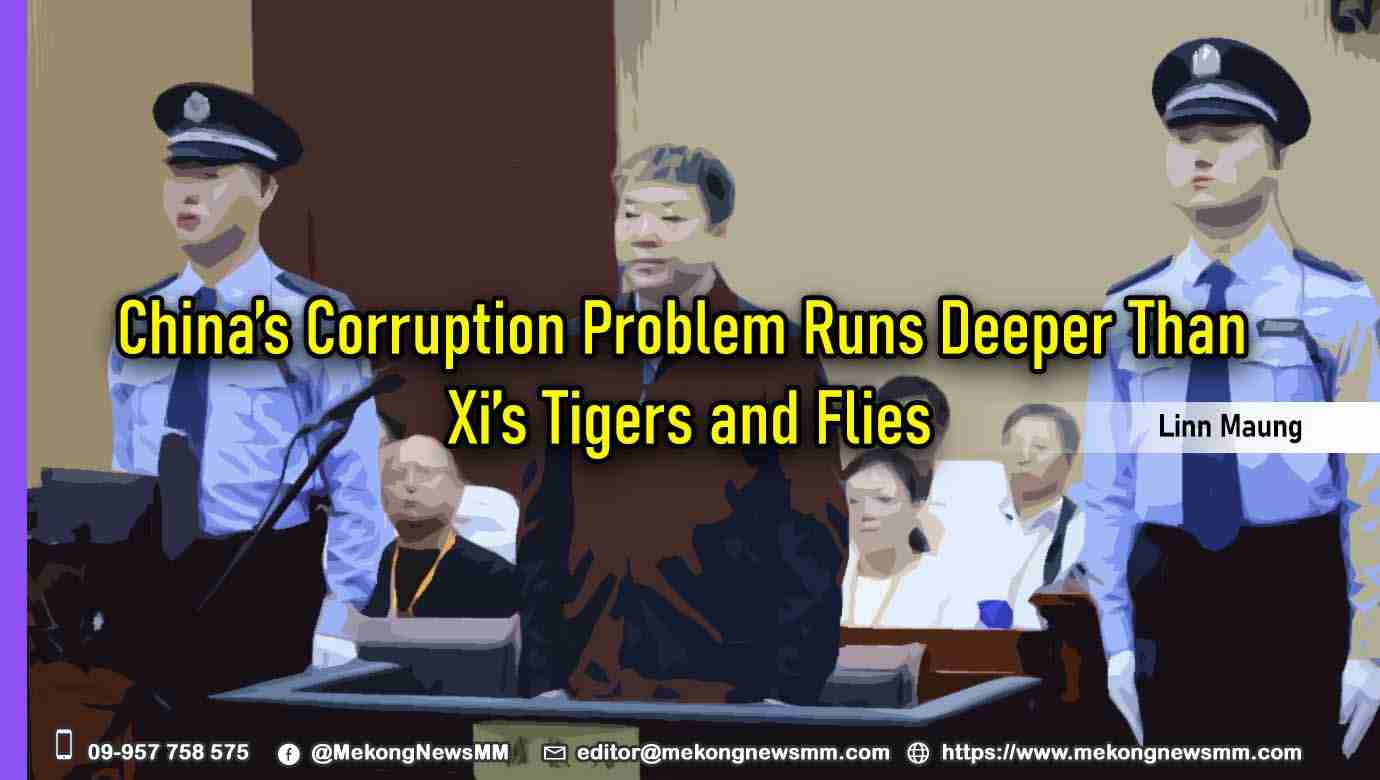
The series of purges of many senior CCP officials in recent years point to an ongoing power struggle in China, observers say. Xi’s dominance over the highest levels of government and his purge of many senior party officials through anti-corruption campaigns has earned him many enemies too over the years. Xi began his anti-corruption campaign in 2012 when he took over as President of China. Under the veil of cleaning up the administration, Xi had removed his political rivals.
The problem for Xi is that the campaign that he had used against his political rivals is now directed against his protégés, now that the President is on a sticky wicket because of the economic problems facing China. A number of Xi loyalists occupying senior positions in the party and the armed forces have been removed. Some of them have vanished from public view.
In the first five years of office between 2012 and 2017, President Xi oversaw a vast and ruthless anti-corruption drive in which more than 170 officials at the level of ministers and deputy ministers were sacked, many of them jailed and more than a million officials were disciplined. In these five years, 35 full and alternate members of the Central Committee of the CCP were disciplined. The top officials to be scalped in the first five years of Xi’s rule included Zhou Yongkang who, as Secretary of the Central Political and Legal Affairs Commission, was in charge of the vast internal security apparatus; the third most powerful politician in China. In 2015, he was jailed for life for bribery, abuse of power and disclosure of state secrets. Among the others removed were Sun Zhengcai, the Communist Party Secretary of Chongqing and sitting politburo member, Xu Caihau and Guo Boxiong, both Vice Chairmen of the Central Military Commission, and Ling Jihua, Director General of the office of the CCP under former President Hu Jintao.
Among the Xi loyalists to have lost their position, the latest is Liu Jianchao, Minister of the International Department of the CCP. The senior diplomat who was regarded as the future Foreign Minister of China and shared close ties with President Xi was taken away for questioning in late July after returning to Beijing from an overseas official trip.
Among others, Xi loyalist Defence Minister Li Shangfu was sacked in December 2023 due to corruption charges. Admiral Miao Hua, who was in charge of ideological control and personnel appointment within the armed forces and an associate of Xi since his days as CCP official in the Fujian province, was suspended from office in November 2024 and removed in June this year after an investigation against him for corruption. In March this year, General He Weidong, the powerful Vice President of the Central Military Commission and a close associate of President Xi, was arrested on corruption charges.
According to analysts, the on-going anti-graft campaign in the PLA can be divided into two distinct waves; the first beginning in 2023 and ending in mid-2024 and the second beginning in November 2024 and still continuing. In these, the “Shaanxi Gang” and the “Fujian Clique” in the PLA have been hit; leading to erosion in the support base of President Xi in the PLA. The Shaanxi Gang is close to Xi because of the association of the President with the Shaanxi province as a youth. The claim to fame of the Fujian Clique is from the long stint of Xi as a senior CCP functionary in the Fujian province. While Miao Hua belongs to the Shaanxi Gang, He Weidong is from the Fujian Clique.
That protégés of Xi are also being arrested on corruption charges is a criticism of the President, that he has been unable to appoint the right people in senior positions of the CCP and the PLA. His inability to protect them has not only created a climate of fear among his friends and spawned enemies for him, but also is an indication that he is ceding ground to political rivals and is under pressure to shed some of his sweeping powers.
#MeKongNews