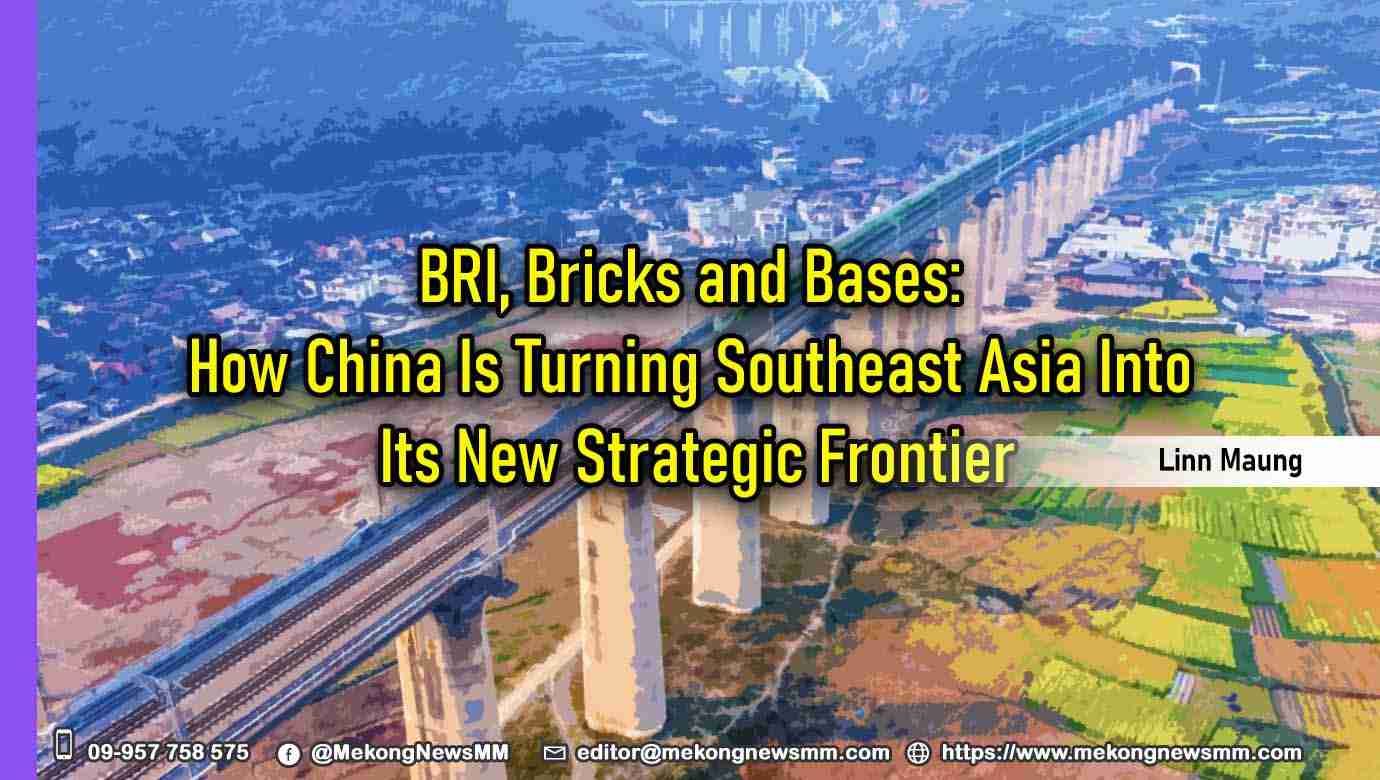


~ Linn Maung ~
In recent years, Myanmar’s lawless peripheries have witnessed the emergence of a troubling phenomenon that has led to the sprawling scam ecosystem. The explosion of scam syndicates in Myanmar, many allegedly backed or facilitated by Chinese actors, has morphed from a localised security issue into a transnational threat, hollowing economic security across Southeast Asia and raising urgent questions about Beijing’s regional ambitions and responsibilities.
The Making of Criminal Enclaves
The post-coup political breakdown in Myanmar created the permissive conditions for scam economies to flourish. Borderland zones such as Kokang, Laukkaing and Myawaddy historically governed by a patchwork of militias and local warlords, became hubs for scam compounds operated by Chinese nationals or Sino-Myanmar networks. These operations have often relied on use deceptive recruitment, forced detention, and digital technologies to conduct financial fraud on a massive scale. Victims range from young Southeast Asians seeking employment to diaspora communities and foreign investors.
By some estimates, scam-related criminal revenue in the region has run into billions of dollars, while thousands of victims remain trapped in guarded compounds. Yet the deeper problem is that these criminal enclaves persist not despite state failure but because of it. In Myanmar’s contested border zones, armed actors, some linked to the junta, others to resistance forces have tolerated and even profited from these activities.
Despite official denials, it is increasingly difficult to ignore the Chinese footprint in the architecture of these scam economies. Many of the operators, financiers and logistical facilitators have ties to mainland China or operate in linguistic and financial circuits embedded in Chinese commercial ecosystems. Moreover, the technological backbone of these operations such as messaging platforms, payment systems, surveillance tools and more have often relied on Chinese-origin applications.
Although Beijing has, at times, cracked down on such actors, especially when domestic pressure has mounted or when the scams began to target Chinese citizens, they have largely been selective and episodic. The deeper concern however is in the fact that China is benefiting from the conduct of the scam ecosystem, both financially as well as politically.
Economic Insecurity as Strategic Pressure
The message therefore is implicit but clear, that in an unregulated digital and security landscape, China holds both the key to the problem and its possible solution. This duality where Beijing is both part of the problem and essential to its resolution also mirrors its approach in other grey zones, such as the South China Sea dispute.
The regional fallout from these scam networks is therefore far from trivial. In countries like Thailand, Laos, and Malaysia, law enforcement has been overwhelmed by the complexity and reach of these transnational scams. Economic losses from digital fraud are mounting, and with them, public mistrust in state institutions. In some areas, local populations have begun to see digital space not as a promise of opportunity but a zone of vulnerability, one where neither states nor international norms have offered protection.
What this reveals is that economic insecurity is no longer a by-product of geopolitical tension; it is increasingly a deliberate instrument within it. The proliferation of scam economies has fragmented trust, weakened regional integration initiatives, and entrenched dependence on external enforcement mechanisms, most notably towards China.
From Criminality to Geopolitical Contagion
The Chinese-led scam networks in Myanmar are nonetheless not isolated criminal phenomena. They represent a convergence of strategic neglect, state fragility, and informal networks of influence that pose a direct challenge to the economic and political security of Southeast Asia.
What Myanmar’s scam economy also reveals is a new layer of geopolitical contestation where non-state actors, criminal syndicates, and grey zone strategies have converged to undermine state authority and regional cooperation. While the language of great power competition has often fixated on military buildup or diplomatic posturing, the quiet destabilisation through economic insecurity enabled by scams and fraud is no less potent.
If left unaddressed, they risk embedding a new norm, one where disorder is tolerated, criminality becomes a diplomatic lever, and regional cooperation is constantly outpaced by shadow networks.
To counter this, regional responses must move beyond reactive policing; and devise a strategy that links economic insecurity to strategic competition, and that holds state and non-state actors accountable not only for their actions but for the spaces of silence and complicity they sustain.
#MeKongNews