

Linn Maung
Perceptions of China’s growing economic power doesn’t translate to an overall rosy opinion of the country and its government in many nations. Negative perception of and lack of confidence in China appears to be at a historic high, especially in Myanmar and Pakistan, countries where significant components of its famed Belt and Road Initiative (BRI), – the China-Pakistan Economic Corridor (CPEC) and the China-Myanmar Economic Corridor (CMEC) were launched, as part of its broader strategy to enhance geopolitical influence and secure trade routes.
Anti-Chinese sentiment in Myanmar has been growing due to several factors. Many people in Myanmar believe that China supports the military junta that seized power in the February 2021 coup, which has led to widespread unrest and conflict. Additionally, there is a perception that China is exploiting Myanmar’s resources and undermining press freedom, human rights, and democracy.
An online survey found that unfavourable attitudes toward China are widespread, with many believing that Beijing seeks to maintain a fragmented Myanmar to further its own interests. This sentiment is further fueled by China’s insistence on reviving controversial projects like the Myitsone Dam, which has faced significant resistance from Myanmar citizens.
The sentiment towards Chinese nationals in Pakistan as well has turned negative. While there is significant cooperation between the two countries, particularly through the China-Pakistan Economic Corridor (CPEC), there have been increasing attacks on Chinese nationals and projects in Pakistan. After the October 6th suicide bombing by the Baloch Liberation Army, in which an explosives-filled pickup truck rammed into a convoy of Chinese workers outside the airport in Karachi, the suicide bomber’s video message is chilling and direct. “China, your interests are not welcome here. Your investments will be burned, your investments will not be safe.” Security concerns and local discontent over the perceived lack of benefits from Chinese projects have created a tense environment.
These developments have created a deep rift in the ‘higher than the mountains and deeper than the ocean’ relationship. In fact a recent round of public exchanges suggests that the China-Pak bilateral is going through a rough patch. “The statement from the Chinese ambassador is perplexing,” Pakistan Foreign Office Spokesperson Mumtaz Zahra Baloch said during a weekly media briefing on Oct 31, 2024. This is a stark departure from the longstanding diplomatic norms between Beijing and Islamabad, in what appears to be a growing public rift after Ambassador Jiang Zaidong raised concerns over the security of Chinese nationals working in Pakistan. Jiang’s comments were in stark contrast to the typical messaging from Chinese leaders and officials, who have long described the bilateral relationship as one between “iron brothers”. Jiang said it was “unacceptable” that Chinese nationals had been attacked twice in six months. Under the $60-billion China-Pakistan Economic Corridor (CPEC), thousands of Chinese nationals are working in Pakistan.
And Islamabad’s rare public push back against China’s recent and increasingly vocal protests and demands regarding the security of its nationals working in Pakistan was reported by Pakistani newspaper Dawn and other news agencies.
So far, China had not publicly admonished Islamabad for the consistent security lapses against its workers. But attitudes are changing and repeated attacks on Chinese nationals on Pakistani soil is seen as a critical challenge for continued China–Pakistan economic cooperation. Attacks against the Chinese on Pakistan soil are bound to put their bilateral ties on a defensive.
The disquiet/unease against the omnipresence of the Chinese projects and the workers has agitated the popular mindset in Pakistan. This is mainly because Pakistan continues to struggle on the social and economic fronts despite heavy doles of projected investments from China. People are now gradually grasping that Chinese money has made no difference to their lives. And this is nearly ten years since the ‘game changer’ CPEC was announced.
But in part, the popular revulsion towards the Chinese in Pakistan, particularly in Balochistan, predates CPEC. Notably, the current spell of insurgency in the restive region is attributed to the time the Chinese were proffered the licence to mine in Chagai hills. The lucrative contract was given to China’s state-owned China Metallurgical Group Corporation (MCC) “with scant independent monitoring”. In 2013, the advent of Chinese personnel in the administration of the Gwadar Port sowed further seeds of anti-China sentiments in Pakistan.
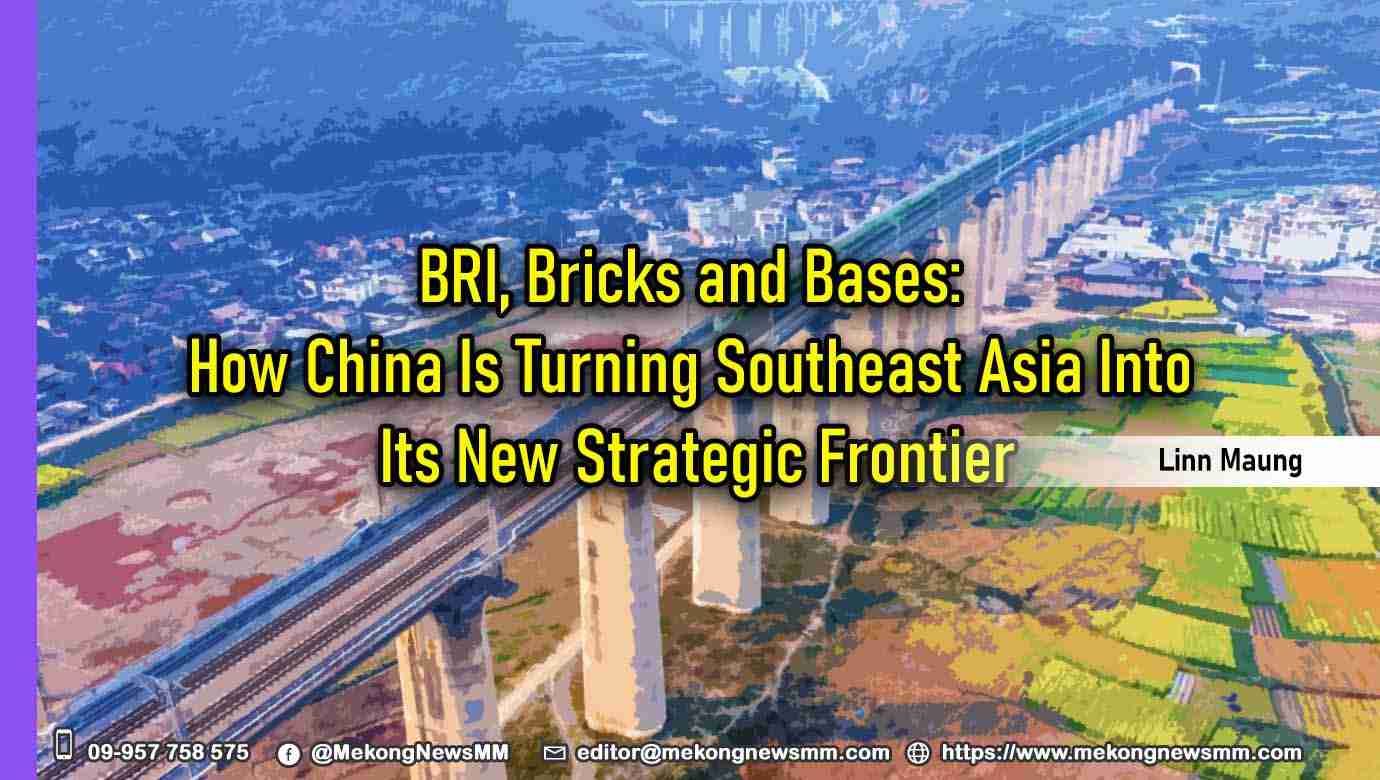
Similarly in Myanmar, China’s major infrastructure investments through its ambitious China-Myanmar Economic Corridor (CMEC), including the Kyaukphyu SEZ and the deep-sea port, now face the daunting task of navigating the escalating conflict throughout the “Land of the Golden Pagoda.”
The 2021 military coup had a negative impact on the CMEC. The Chinese embassy in Myanmar became a focal point for demonstrators to criticise China’s muted response to the coup, its engagement with the military regime, and Chinese state media’s portrayal of the coup as a “cabinet reshuffle”. Although China supported ASEAN’s Five-Point Consensus on Myanmar, its ongoing engagement with the military junta has fuelled anti-China sentiment among pro-democracy forces/activists. During the regime’s severe crackdowns on protests in March 2021, Chinese factories in Yangon’s Hlaingthayar township were the target of attacks. Despite the Chinese state media’s assurances that the 2021 coup and subsequent violence would not derail CMEC projects, China’s repeated calls for punishing the perpetrators amidst the junta’s crackdowns have done little to shift public opinion in Myanmar.
There years into the coup, the three Brotherhood Alliance (3BHA) — a coalition of three leading ethnic armed organisations (EAOs), namely the Arakan Army (AA), the Myanmar National Democratic Alliance Army (MNDAA), and the Ta’ang National Liberation Army (TNLA) been gaining more ground and functional control in Rakhine State, where the Kyaukphyu SEZ, the centrepiece of CMEC-related infrastructure projects is located, poised to wrest control of Rakhine from the military regime’s reach.
In light of these developments, China’s major infrastructure investments in Myanmar, including the Kyaukphyu SEZ and the deep-sea port, now face the daunting task of navigating the escalating conflict throughout Myanmar. For now the CMEC’s future amidst the ongoing conflict in Myanmar seems uncertain.
In Myanmar, public anxiety has also grown amid concerns about potential debt traps resulting from massive infrastructure development loans from China. Sovereignty issues, particularly after how Sri Lanka was forced to hand over the Hambantota port to China on a 99-year lease, has become a major point of contention.
Pakistan’s financial difficulties and political instability have discouraged China from making new investments in the CPEC. Added to this the security concerns have made it challenging for the mega project to regain momentum anytime soon.
A piece, titled ‘Beefing up security’, by security analyst Muhammad Amir Rana, published by Pakistani publication Dawn on November 3, suggested that China may use its private security companies to provide “inner-circle security” for Chinese workers in Pakistan.
But what would be the implications of a formal Chinese security presence within its borders for Pakistan’s sovereignty? If anything this sounds like a recipe for further rift in the relationship.
China’s slipping reputation provides a host of challenges for its projects in Myanmar and Pakistan, the CPEC & CMEC which were launched with great fanfare and publicised as harbingers of great opportunity. While a negative public image certainly complicates China’s foreign policy goals. Moreover, the aggressive “Wolf Warrior” diplomatic style that has become popular under Chinese President Xi Jinping has drawn the ire sections in these countries. China’s attempts to economically coerce these countries is beginning to backfire.
#MeKongNews