

~ Linn Maung ~
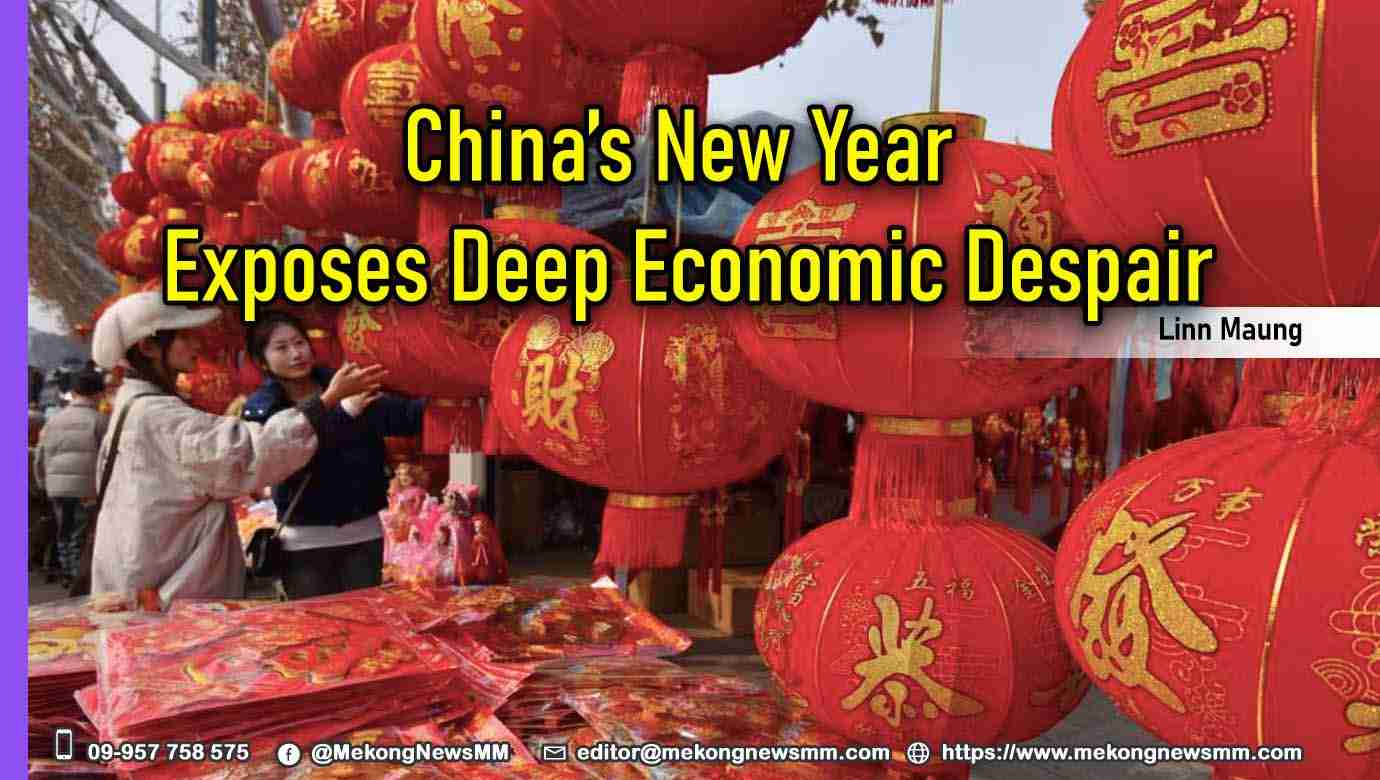
The Spring Festival, once a cherished season of reunion and joy, has increasingly become a stage for performance and pretense in many parts of China. What should be a heartfelt celebration of family bonds has turned into a contest of appearances, where individuals feel compelled to showcase wealth they do not possess. Behind the fireworks and feasts lies a troubling reality: many Chinese citizens are spending their entire year’s savings in just seven days, not out of genuine festivity, but to preserve dignity in front of relatives and neighbours.
In rural villages, the return of migrant workers is often marked by exaggerated displays. Cars that sit idle all year are rented or borrowed just to make a grand entrance. Premium cigarettes and lavish gifts are handed out, only to be replaced later with cheaper substitutes once the show is over. Women dress in fur coats and carry handbags that look expensive but are filled with daily necessities. The atmosphere is one of competition rather than reunion, where every gesture is scrutinized and compared.
The mounting social pressure surrounding the Spring Festival has been described by many as overwhelming. On Chinese social media, one widely shared confession illustrated the sentiment: in youth, comparisons revolved around school grades, but in adulthood, they shifted to income, houses, and cars. For decades, the speaker admitted, they had never “won” in these comparisons. This reflection resonated because it mirrored the experiences of countless others, highlighting how the holiday has transformed from a celebration of family warmth into a test of dignity. People feel trapped between two painful choices spend their savings to maintain face or hold back and risk humiliation.
Observers have noted that the government and the ruling Communist Party of China (CCP) have not responded to this despair with sincerity. Employment opportunities remain limited, and wages for migrant workers have declined significantly in recent years. Despite these economic realities, the expectation to display prosperity has not eased. Instead of implementing policies that genuinely reduce poverty and create sustainable livelihoods, citizens are left to conceal their struggles behind borrowed wealth and staged appearances. This widening gap between official rhetoric and the lived reality of ordinary people has only deepened feelings of hopelessness.
The role of the CCP in this despair cannot be overlooked. Wrong policies, corruption, and systemic inefficiencies have compounded the struggles of ordinary citizens. Economic reforms that promised prosperity have often benefited elites and party insiders, while rural workers and urban migrants continue to face stagnant wages and precarious employment. Corruption at local levels has diverted resources meant for development, leaving communities without adequate support. The government’s emphasis on maintaining a façade of national strength has trickled down to individuals, who feel compelled to maintain their own façades of wealth during the Spring Festival.
The numbers tell a stark story. A worker earning just over 6,000 yuan a month (around $830) saves less than 20,000 yuan annually (about $2,800). Yet during the Spring Festival, nearly half of that is spent on red envelopes and gifts alone. Another worker earning 4,000 yuan a month (about $560) sees an entire year’s savings wiped out after the holiday. Some even borrow money to build Western-style houses in their hometowns, creating a façade of success while sinking deeper into debt. These houses, shiny on the outside but hollow within, symbolize the emptiness of this forced performance. The despair is not confined to villages. In cities, families host relatives with exaggerated gestures, often beyond their means. A Shanghai woman described the exhausting cycle of gift-giving, cold apartments, and endless rounds of mahjong. The ritual is draining, both financially and emotionally. What should be a celebration of kinship has become a burden that many dread.
The irony is striking. The truly wealthy often dress simply when they return home, fearing envy or resentment. Meanwhile, the poor spend extravagantly to avoid being judged as failures. This phenomenon has been described as “generous poverty” using money to buy praise and recognition that has been absent throughout life. Yet once the festival ends, reality returns with rent, debts, and credit card bills. The cost of those seven days becomes painfully clear.
Village authorities have begun to show signs of discontent, with some communities resorting to loudspeaker announcements cautioning against exaggerated displays of success. Messages emphasized that returning home should centre on family rather than fabricated titles or burdensome shows of wealth. Such warnings reveal a growing recognition that relentless comparison is steadily eroding the sincerity of the holiday.
The Spring Festival has become a mirror of China’s economic pressures. With slowing growth, rising unemployment, and shrinking incomes, the need to maintain appearances has only intensified. People fear not only poverty but also the shame of being seen as poor. This dual burden economic and psychological creates a cycle of despair that the government has failed to break. Wrong policies that prioritize image over substance, corruption that drains public resources, and the absence of genuine reforms have all contributed to this climate of despair.
Yet amid the exhaustion, some voices call for change. Social media activists argue that sincerity should replace pretense, that genuine kindness matters more than the thickness of a red envelope. They remind people that what relatives remember is not the car you drove or the cigarettes you handed out, but whether you are living well. These reflections hint at a possible shift in values, though the weight of tradition and social pressure remains heavy.
The Spring Festival, once a symbol of renewal, now exposes the cracks in society. It reveals the widening gap between appearance and reality, between official promises and everyday struggles. Until employment opportunities improve and citizens can live honestly without fear of judgment, the festival will remain a season of dread for many. The hope is that one day, reunion will mean sincerity again, and celebration will no longer require the mask of fake wealth.
Sources:
https://www.scmp.com/news/china/society/article/3251234/chinas-young-workers-dread-lunar-new-year
https://www.reuters.com/world/china/chinese-families-struggle-spring-festival-costs-2026-02-10
https://www.ft.com/content/china-lunar-new-year-economic-strain
https://www.bbc.com/news/world-asia-china-lunar-new-year-2026
#MeKongNews