ဆောင်းပါး

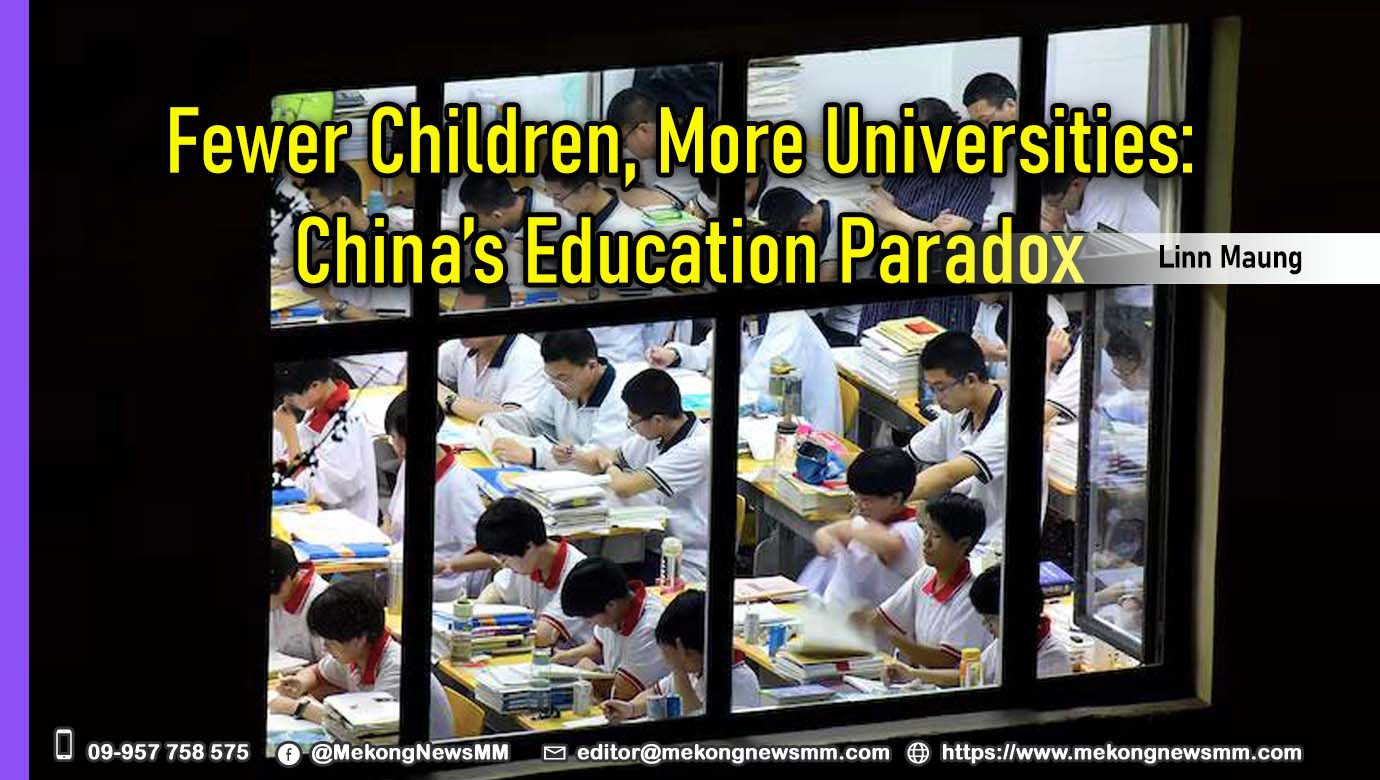
Fewer Children, More Universities: China’s Education Paradox

မဲခေါင် 21 Nov - 2026
~ Linn Maung ~ Falling birth rates are shrinking classrooms at the lower end of the education system even as demand for high-school and university places continues to rise, forcing Beijing to rethink how it allocates educational resources. China is confronting an unusual demographic challenge – fewer children entering schools

~ Linn Maung ~

Falling birth rates are shrinking classrooms at the lower end of the education system even as demand for high-school and university places continues to rise, forcing Beijing to rethink how it allocates educational resources.

China is confronting an unusual demographic challenge – fewer children entering schools today, but mounting pressure on high schools and universities to accommodate larger student cohorts in the coming years. The resulting imbalance is forcing Beijing to undertake a major recalibration of its education system, shifting resources from early education towards higher learning.

The National Development and Reform Commission (NDRC) has identified the mismatch as a key challenge during the 15th Five-Year Plan (2026-2030), with senior officials warning that supply-demand pressures in senior high schools and higher education are likely to intensify.

The government plans to expand high-school capacity through new construction, renovation and more efficient use of existing infrastructure. University enrolments are also expected to increase, particularly at leading institutions, alongside support for research-oriented universities and specialised vocational colleges offering undergraduate degrees.

The urgency reflects a demographic lag. Although China’s birth rate has declined sharply, the impact on different educational stages is unfolding unevenly. Students entering high school are expected to peak around 2029, while university entrants could reach their highest numbers around 2032. These cohorts were born when China’s population was considerably larger, creating a temporary surge in demand even as the pipeline of younger children contracts.

Rising parental aspirations are adding to the pressure, with families increasingly seeking higher admission rates into senior high schools and undergraduate programmes. Expanding capacity, therefore, is not merely a demographic response but also an attempt to accommodate changing educational expectations.

At the other end of the system, the consequences are already visible. Between 2021 and 2025, enrolment in kindergartens, primary schools and junior high schools declined by nearly 17 million, according to NDRC officials. Rather than simply shutting institutions, authorities are considering smaller classes and converting surplus school buildings into facilities for arts, labour education and other activities.

The shift also reflects Beijing’s broader economic priorities. With China’s population declining since 2022, policymakers increasingly see education as an instrument for improving productivity, technological competitiveness and the quality of human capital. Scientific literacy, vocational competence and research capabilities are becoming central to the country’s growth strategy.

The demographic backdrop is stark. China’s annual births, which remained between 15 million and 16.5 million through much of the early 2000s and mid-2010s, briefly rose following the introduction of the nationwide two-child policy in 2016. The subsequent decline proved much steeper. Births fell to 7.92 million in 2025, less than half the level a decade earlier and the lowest since 1949.

The challenge for Beijing is consequently no longer just how many schools or universities to build, but how to redistribute educational resources across generations. Smaller classrooms, expanded universities and greater investment in research are emerging as complementary responses to a shrinking population.

#MeKongNews

(လွတ်လပ်သည့် မီဒီယာအဖြစ် ရေရှည်ရပ်တည်နိုင်ရေး သင်တို့အကူအညီလိုအပ်နေပါသည်။ ဤနေရာတွင် www.mekongnewsmm.com/donation နှိပ်၍ လှူဒါန်းနိုင်ပါသည်)

Mekong News

Mekong News

About Author

မဲခေါင်သတင်းဌာနမှ အကြီးတန်းတာဝန်ခံ အွန်လိုင်းအယ်ဒီတာတစ်ယောက် ဖြစ်သည်။ သတင်းမီဒီယာကျင့်ဝတ်၊ လူသားကျင့်ဝတ်တို့ကို လိုက်နာပြီး သတင်းများကို တင်ဆက်သွားမည် ဖြစ်သည်။

Donate

လွတ်လပ်တဲ့ မီဒီယာအဖြစ် ရေရှည်ရပ်တည်နိုင်ရေးအတွက် ...

သင်တို့ အကူအညီကို လိုအပ်နေပါတယ်။

Donate Now

Related News

ဆောင်းပါး

သတင်းလွတ်လပ်ခွင့်ဆိုင်ရာ ပြစ်တင်ဝေဖန်မှုအသစ်များနှင့် ရင်ဆိုင်နေရသည့် ရှီကျင့်ဖျင်နှင့် ဟောင်ကောင်ခေါင်းဆောင် ဂျွန်လီ

~ လင်းမောင် ~ သံတိုင်နောက်ရောက်နေသည့် သတင်းထောက်တစ်ဦး၊ ပိတ်သိမ်းရန် အတင်းအကျပ် ဖိအားပေးခံရသည့် သတင်းစာတစ်စောင်၊ နှစ်ရှည်ထောင်ဒဏ် ချမှတ်ခံရမည့် အန္တရာယ်နှင့်

Donate

လွတ်လပ်တဲ့ မီဒီယာအဖြစ် ရေရှည်ရပ်တည်နိုင်ရေးအတွက် ...

သင်တို့ အကူအညီကို လိုအပ်နေပါတယ်။

Donate Now
ဆောင်းပါး

စီးပွားရေး အိပ်မက်ဆိုးအသစ်တစ်ခု ဖြစ်လာသည့် တရုတ်၏ AI အိပ်မက်

~ လင်းမောင် ~ နှစ်ပေါင်းများစွာကြာအောင် ပေကျင်းသည် ဉာဏ်ရည်တု (AI) ကို တရုတ်နိုင်ငံ ထွန်းတောက်လာမှု၏ နောက်ထပ် မဏ္ဍိုင်တစ်ခုအဖြစ် ပုံဖော်ခဲ့သည်။ AI သည် အိမ်ခြံမြေကဏ္ဍ ပြိုလဲမှုကို အစားထိုးဖြည့်ဆည်းပေးရန်၊ ရင်းနှီးမြှုပ်နှံသူများ၏ ယုံကြည်မှုကို

Donate

လွတ်လပ်တဲ့ မီဒီယာအဖြစ် ရေရှည်ရပ်တည်နိုင်ရေးအတွက် ...

သင်တို့ အကူအညီကို လိုအပ်နေပါတယ်။

Donate Now
ဆောင်းပါး

China’s AI Dream Turns into a New Economic Nightmare

~ Linn Maung ~ For years, Beijing projected artificial intelligence as the next pillar of China’s rise. AI was supposed

Donate

လွတ်လပ်တဲ့ မီဒီယာအဖြစ် ရေရှည်ရပ်တည်နိုင်ရေးအတွက် ...

သင်တို့ အကူအညီကို လိုအပ်နေပါတယ်။

Donate Now
ဆောင်းပါး

အလုပ်သမားများ၏ ဒေါ်လာ ၁ ဒဿမ ၆ ထရီလီယံတန် အိမ်ရာစုဆောင်းငွေများအပေါ် ထိန်းချုပ်မှု ပိုမိုတင်းကျပ်လိုက်တဲ့ တရုတ်

~ လင်းမောင် ~ တရုတ်နိုင်ငံ၏ အိမ်ရာစုဆောင်းငွေရန်ပုံငွေ (Housing Provident Fund) သည် နိုင်ငံ၏ ဘဏ္ဍာရေးစနစ်အတွင်း ထူးခြားသော နေရာတစ်ခုတွင် တည်ရှိနေသည်။ အလုပ်သမားများနှင့် အလုပ်ရှင်များသည် တစ်ဦးချင်း စာရင်းများအတွင်းသို့ ငွေကြေးထည့်ဝင်ကြသော်လည်း အစိုးရက

Donate

လွတ်လပ်တဲ့ မီဒီယာအဖြစ် ရေရှည်ရပ်တည်နိုင်ရေးအတွက် ...

သင်တို့ အကူအညီကို လိုအပ်နေပါတယ်။

Donate Now
ဆောင်းပါး

China tightens its grip on workers’ $1.6 trillion housing savings

~ Linn Maung ~ China’s housing provident fund occupies an unusual position in the country’s financial system. Workers and employers

Donate

လွတ်လပ်တဲ့ မီဒီယာအဖြစ် ရေရှည်ရပ်တည်နိုင်ရေးအတွက် ...

သင်တို့ အကူအညီကို လိုအပ်နေပါတယ်။

Donate Now
ဆောင်းပါး

ဂျန်ဆန်ဟောင်း၊ တရုတ်သူလျှို နဲ့ အချစ်ဇာတ်လမ်း

~ CWM ~ ပြီးခဲ့တဲ့ မေလက သမ္မတ ဒေါ်နယ်ထရမ့် တရုတ်ပြည်ကို အလည်သွားတော့ သူနဲ့အတူ ထင်ရှားတဲ့ ထိပ်တန်းအမေရိကန်စီးပွားရေးသမားတချို့ကိုပါ ခေါ်ဆောင်သွားတယ်။ ဒီအထဲမှာ Apple က တင်မ်ကွတ်၊ Tesla က အီလွန်မတ်စ်

Donate

လွတ်လပ်တဲ့ မီဒီယာအဖြစ် ရေရှည်ရပ်တည်နိုင်ရေးအတွက် ...

သင်တို့ အကူအညီကို လိုအပ်နေပါတယ်။

Donate Now
ဆောင်းပါး

Binance ကို ဒူးထောက်သွားစေခဲ့တဲ့ ကမ္ဘာ့အဆင့် ဟက်ကာတွေကို မြောက်ကိုရီးယား ဘယ်လို မွေးထုတ်သလဲ

~ ဒင်းဒင်း ~ အမေရိကန်ဒေါ်လာ ၆ ဒဿမ ၃ ဘီလီယံ ကောက်စားသွားခဲ့တဲ့ Binance ခရစ်ပ်တို ဖောက်ထွင်းမှုတွေလို ကြီးကျယ်တဲ့ သိမ်းပိုက်မှုတွေလုပ်ဖို့ တာဝန်အပ်နှင်းခံရတဲ့ သူတို့ရဲ့ ထိပ်တန်း ကွန်ပျူတာ ဟက်ကာတွေကို မြောက်ကိုရီးယားအစိုးရက

Donate

လွတ်လပ်တဲ့ မီဒီယာအဖြစ် ရေရှည်ရပ်တည်နိုင်ရေးအတွက် ...

သင်တို့ အကူအညီကို လိုအပ်နေပါတယ်။

Donate Now