

~ Linn Maung ~
Removing senior commanders may be easier than finding replacements who combine political loyalty with operational experience and command authority.
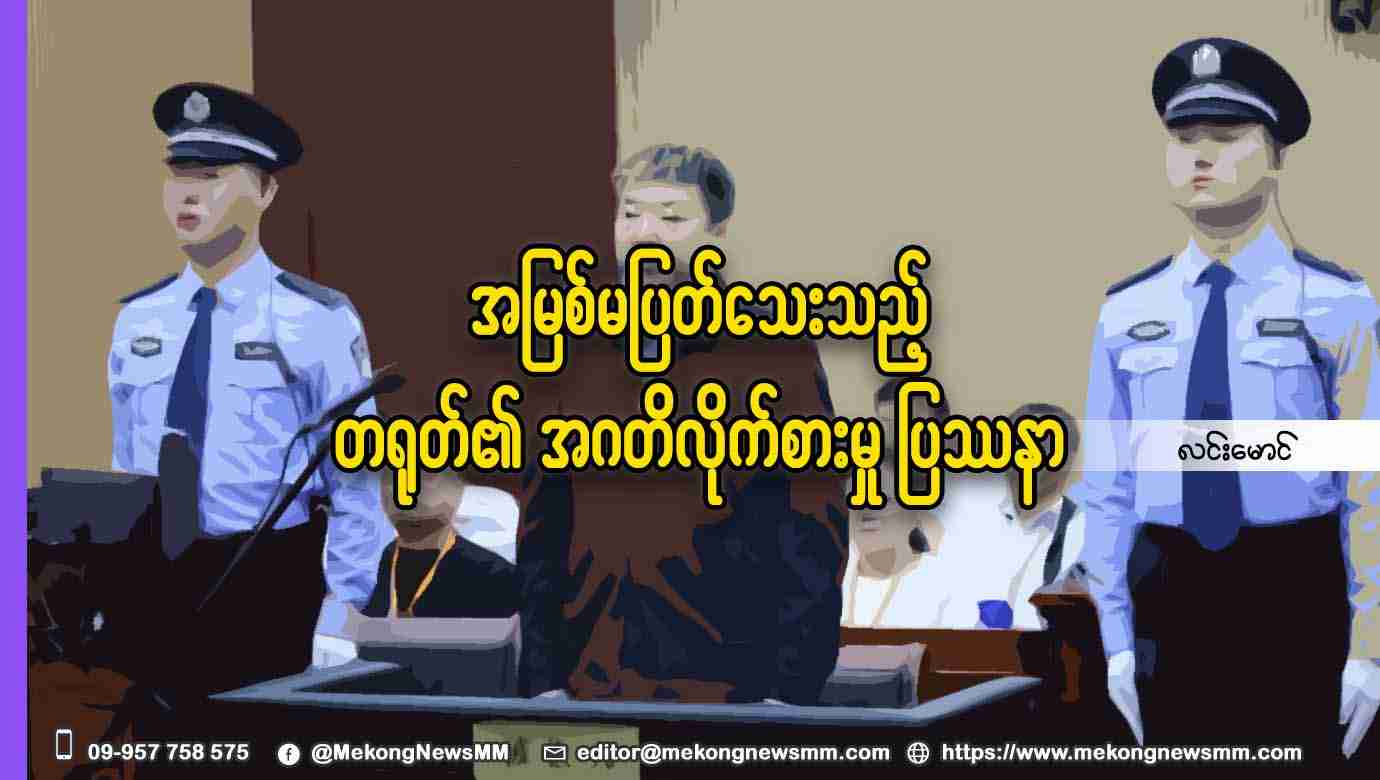
China’s latest purge of senior military leaders has exposed a difficult problem for President Xi Jinping: removing commanders deemed politically unreliable can be done swiftly, but rebuilding a military leadership that is both loyal to Xi and capable of commanding the People’s Liberation Army (PLA) could take years.
The Chinese Communist Party (CCP) announced on September 21 that Zhang Youxia, former vice chairman of the Central Military Commission (CMC), and Liu Zhenli, former chief of the CMC Joint Staff Department, had been expelled from the Party and the military over allegations including violations of political discipline, corruption and factionalism.
The action is the latest in an expanding purge of senior PLA officers under Xi, and is particularly significant because of the positions and military networks built by the two men over decades.
Zhang, one of the PLA’s most senior figures and formerly second only to Xi in the CMC hierarchy, had extensive links across the military establishment. Liu, as head of the Joint Staff Department, occupied a key position in China’s operational command structure.
The immediate effect of the purge is therefore not simply the removal of two officers, but the disruption of established relationships and networks within the senior command.
A CCP political scholar cited in the assessment said the campaign, officially presented as an anti-corruption drive and an effort to strengthen Party control over the military, increasingly reflects Xi’s demand for absolute political loyalty.
The distinction is important. Corruption can be investigated and punished relatively quickly. Building a senior command cadre with the required operational experience, professional credibility and political trust is a much longer process.
According to the assessment, Xi could use a period of relative stability in relations with Washington to reorganise the CMC and address the vacancies created by the purge. But the rebuilding of the command structure is unlikely to be immediate.
There is no way to get it done without three to five years, strategic analyst said, pointing to the dismantling of military networks associated with Zhang, Liu and earlier purged leaders such as former Defence Minister Li Shangfu.
The disruption does not necessarily mean a slowdown in China’s military modernisation. Programmes involving artificial intelligence, advanced weapons and other capabilities are likely to continue under established institutional structures. Indeed, tighter political control could be intended to ensure that such capabilities remain firmly aligned with the CCP leadership.
The deeper challenge is institutional. Senior commanders capable of leading large military organisations normally spend decades acquiring operational experience, professional relationships and authority. Replacing them with officers who are simultaneously trusted by Xi and accepted as capable commanders cannot be achieved simply through appointments.
The latest purge therefore highlights a paradox at the heart of Xi’s military restructuring: the more aggressively he removes commanders he does not fully trust, the harder it may become to quickly assemble a leadership cadre combining loyalty, experience and command credibility.
For Xi, rebuilding that balance may prove more difficult than the purge itself.
#MeKongNews