~ Linn Maung ~
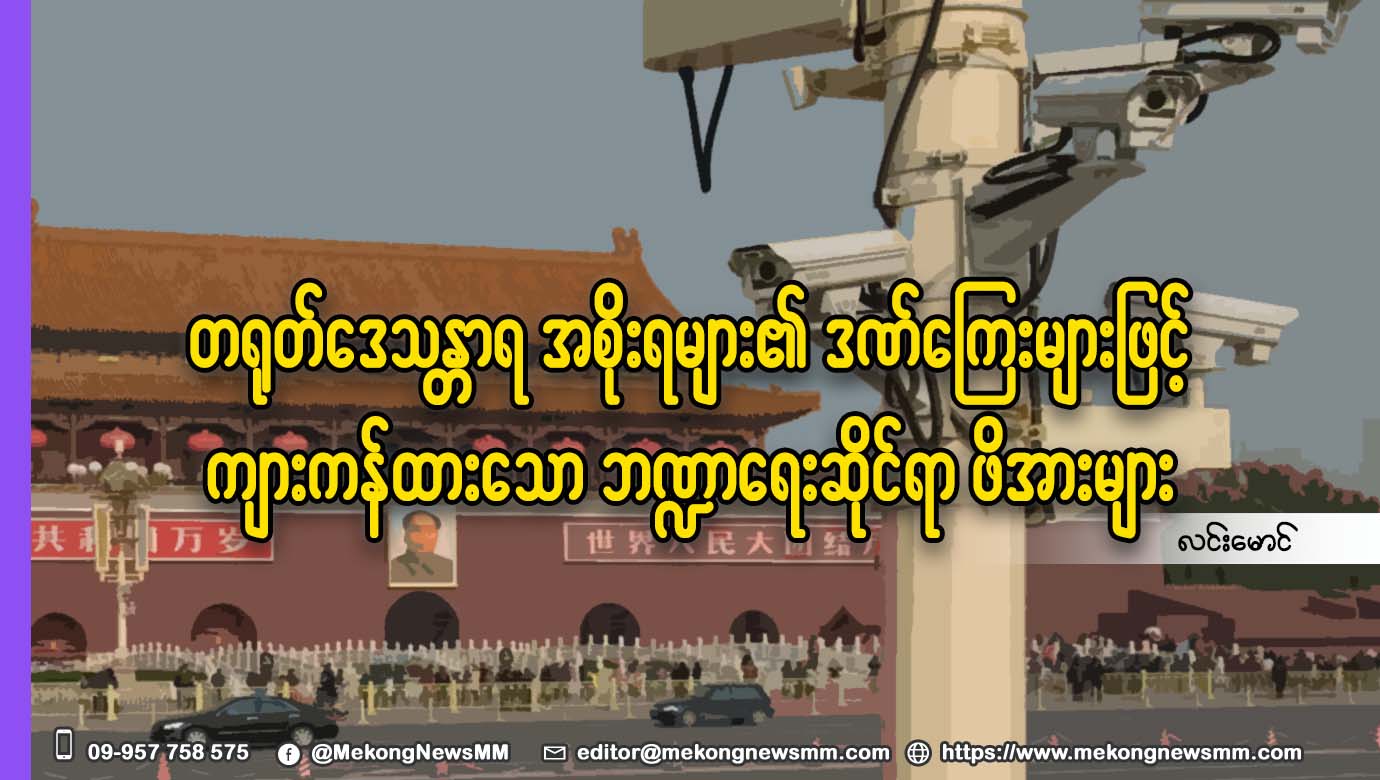
A violent knife attack against a Japanese woman and her child late in June 2024 in the eastern Chinese city of Suzhou, unleashed a torrent of xenophobic comments on Chinese social media — some even celebrating the attacker as a hero.
In what Chinese state media portrayed as a full-scale effort to grapple with the problem of violent xenophobia, several platforms issued statements last week condemning the “extreme nationalist” comments users had left under news stories about the Suzhou attack. They included Weibo, Tencent, Phoenix Media, Baidu, and others. State media feted these statements of apparent self-reflection and resolve, even as they chastised online platforms for their past lapses.
The state-run Global Times, an outlet under the CCP’s official People’s Daily that for decades has made nationalism its primary selling point, condemned social media platforms that have “not only tolerated such content, but have even encouraged it” in a bid to boost views and revenue. However, this moment of supposed reflection ignored the deeper roots of extreme nationalism in the public discourse of the Chinese party-state, which for years has nurtured a sense of nationalist outrage over the imagined slights of foreign countries, including Japan in the United States, and has turned the blind eye to dangerous nationalist mawkishness online. The most important indication that China’s soul-searching over extreme nationalism is a momentary ripple in the ongoing pattern of state-driven nationalist sentiment comes in the continued coverage in the Party-State controlled media.
Despite the talk of incidental nationalism, any regular user of Chinese social media might have the sense that it is awash with nationalist sentiment. And while much of this has no direct affiliation with the state, China’s government has constantly peddled nationalism from center stage. On June 28, as Ministry of Foreign Affairs spokesperson Mao Ning responded to a question about the Suzhou incident, she held up the tragic death of Hu Youping (胡友平), the Chinese bus driver who died defending the Japanese woman and her child, as evidence of “the spirit of the Chinese people to act bravely and help others.” This remark set the tone for state media coverage that day.
This disturbing incident followed another brutal killing of a Japanese schoolboy in the southern Chinese city of Shenzhen in mid-September 2024, making headlines across the world. Unlike the Suzhou incident, nobody was able to save the child. He soon passed away tragically, causing nationwide debate about what to do with CCP-fed anti-Japanese culture. The wider context of the tragedy raises serious questions about how it might be linked to decades of anti-Japanese education, entertainment, and cultural conditioning in China. The attack occurred on the anniversary of the Mukden Incident that began Japan’s invasion of China in 1931, and just months after another nearly deadly attack on a Japanese mother and her child in another city.
The identity of the suspect was never publicized by CCP authorities, but his motives can’t be more obvious. Without anyone explaining, every Chinese knows what is going on here. It’s the equivalent of killing a random Arab child on 9/11. People instantly get the message you are sending. The connection between this toxic nationalism and real-life violence was underscored by the reaction of one Sichuan County magistrate, who wrote online that the boy’s death mattered little since “our rule is killing Japanese” (我们的纪律就是杀日本人) — suggesting China’s historical grievances made violence against Japan a matter of obligation.
The tragedy at the Japanese school in Shenzhen has been followed by a disturbing silence thanks to active censorship by the Chinese Party-State apparatus. However, the case has invited commentary, and some soul-searching, in Chinese-language media outside the PRC — the kind that has not been readily possible inside. One particular focus of discussion was the surfacing on September 20, two days after the attack, of a letter attributed to Koyama Junpei (小山純平), identified as the father of the boy who was killed. Emerging on China’s internet in late September 2024, the letter offered a short but intimate portrait of the boy, who had a keen eye for the smallest of creatures, and especially loved insects and reptiles, it said. The letter was open-hearted in its tone, urging the public against hate: “We don’t hate China, and we don’t hate Japan,” it read. “My only wish is that such a tragedy will never happen again.”
Initium Media said it has spoken to a Chinese journalist who confirmed the authenticity of the letter, which they said had been written in Japanese by the father and then translated into Chinese. The outlet followed up later with an in-depth op-ed on the tragedy by Yu Daiyan (俞岱巖), which explored the complex aspects of anti-Japanese sentiment and nationalism in China — including the growing online patriotic traffic (愛國流量) market in China after 2020 — and acknowledged also important signs of popular shock and remorse over the recent killing that worked against the grain of official censorship. It noted, for example, that the Japanese Consulate in Guangzhou has said that the Shenzhen Japanese School has received more than 1,000 bouquets of flowers from the public, and more than 3,000 messages of condolence.
A commentary in Taiwan’s World Journal (世界日報), which is owned by United Daily News (UDN), focused more squarely on the “xenophobic education” (仇恨外國教育) of the Chinese Communist Party. “For decades, Japan has provided funds to help China’s development,” the paper wrote, “while the CCP has used anti-Japanese dramas to promote anti-Japanese propaganda.” The commentary noted too that Russia, which still holds territory in the Russian far east once belonging to China, is today a “no limits” partner. In an op-ed recently, Taiwan’s Want Daily (旺報), a Taiwanese pan-blue media owned by the food and media conglomerate Want Want, said the Shenzhen killing had case “an even deeper shadow” over the already strained Sino-Japanese relationship. The outlet spoke out against online nationalism in China pushed by influencers, saying that anti-Japanese animosity should not be confused with patriotism.
Articles on WeChat linking the Shenzhen and Suzhou cases, as well as mentioning that images of the Japanese school’s entrance had been circulating on social media before the attack, were removed from the popular platform. While such nuanced voices were stopped in their tracks, posts that urged online caution about the sensitivity of the September 18 anniversary were allowed to go viral. One example was an article on Baidu about netizen outrage over an internet vlogger who had her account suspended for allegedly disparaging the anniversary by calling it “June 18.” A silence about context was enforced the day of the killing, state-affiliated media outlets readied the next, predictable phase — the demonizing of context itself.
Can CCP authorities suddenly declare Japan to be the “good guy”, or issue a ban on anti-Japan content? Can authorities announce a special protection scheme for Japanese citizens living in China? Doing so would risk a massive backlash, for all of the above-mentioned reasons. In fact, even the Communist Party of China itself also owes a great part of its own existence to it. A pivot to putting an explicit ban on anti-Japan sentiments would be seen as a betrayal of its own pledge to the people. Just like the Emperor of Japan was spared a trial in order to save the core foundation of Japanese society, anti-Japanese sentiment will never be touched in order to save the core foundation of modern China. This is why, in both knifing deaths in Suzhou and in Shenzhen, authorities tried very hard to downplay the “Japan” factor in them.
Undoubtedly, China should present history clearly and transparently. The aggression of the Japanese army and the loss of humanity, as well as the ignorance of Chinese people at that time, are beyond doubt. However, how can we convey this information while distinguishing between the past and the present, the system and the individual, and adults and children? How can such complex information be communicated through short videos in Chinese social media, is a major concern in the CCP-led China owing its existence to anti-Japan jingoism fed over the decades.
#MeKongNews