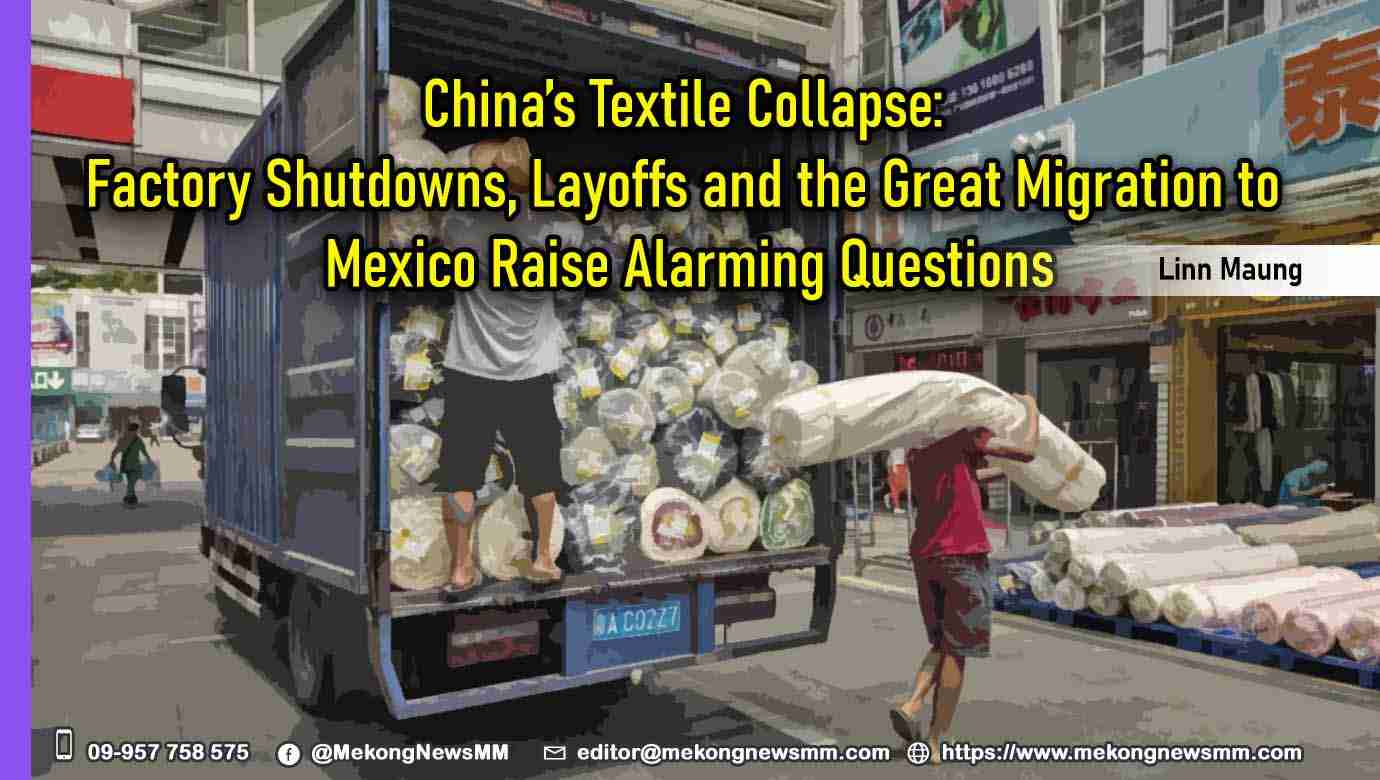


~ Linn Maung ~
The once unshakeable “Iron Rice Bowl” of stable employment in China is crumbling. In just few days, over 40 banks have merged, with countless others teetering on the edge of collapse. Mortgage defaults are spreading, and foreclosed properties are piling up like mountains, creating a panic among banks struggling to liquidate assets. This isn’t merely a crisis—it’s a transformative period for China’s economy, raising urgent questions about the human cost as more individuals face job losses in this financial storm.
China’s economic downturn has thrown its banking sector into chaos. Small and medium-sized banks are struggling to stay afloat, with almost 200 deregistered since 2024—more than the past three years combined. Reports suggest that Beijing will enforce stringent salary caps and cuts on Central Financial Enterprises. Banks are running out of funds, leaving customers across mainland China struggling to withdraw their money. Some are even finding their deposits have vanished. The crisis underscores the severe financial challenges facing China’s banking industry.
In Xinyang, Henan, a distraught woman broke down in tears at a bank after being denied withdrawal of her 800,000 Yuan ($110,000) fixed-term deposit. Her case is far from isolated, as numerous netizens have shared similar predicaments. In many instances, bank employees have converted fixed-term deposits into investment products without the customer’s consent, deceiving those who lack financial literacy. Many only discover the truth when they attempt to access their funds.
A woman in Shenyang posted a video recounting her struggle to withdraw a modest 5,000 Yuan ($687) from her account. The bank demanded proof of the source of the funds, her husband’s presence, and even their marriage certificate. Despite her evident frustration, the bank maintained its stringent requirements, leaving her exasperated.
A woman living in Hubei province shared a similar experience, where she faced half a day of scrutiny while trying to withdraw money for her husband’s hospital expenses. The bank staff even inquired about the hospital and department where her husband was receiving treatment. Her anger was palpable as she criticized the bank’s practices, contrasting it with the ease with which money could be transferred for telecom fraud.
Analysts believe that massive government bond issuances, sometimes amounting to trillions, are forcing banks to purchase these bonds, draining their liquidity. This leaves them unable to process transactions and settlements, prompting banks to impose strict controls on customer accounts, reducing withdrawal amounts and transaction frequency.
The banking industry’s once stable career prospects, often referred to as the “Iron Rice Bowl,” have now seen widespread layoffs and salary cuts. Among the 42 listed banks, the total number of employees exceeded 2.56 million, but in the first half of last year alone, approximately 38,000 employees were laid off. Of these, 32 banks experienced declines in staff numbers, while 30 banks reported reductions in average monthly salaries. One bank employee lamented that their average monthly salary had plummeted from 30,000 Yuan to less than 10,000 Yuan.
The wave of layoffs has truly begun. An increasing number of people are defaulting on their mortgage payments, leading to a pileup of foreclosed properties. In the past, a court summons would swiftly follow a three-month mortgage default, but now banks are begging for any payment, even offering to extend deadlines.
Alarmingly, some banks have started refusing to accept foreclosed properties because they already hold too many and cannot sell them. In the first quarter of this year alone, the number of foreclosed properties nationwide surpassed 100,000 marking a 192% increase compared to the previous year. The transaction rate for these properties is less than 14%.
In just three months, 600,000 households have defaulted on their mortgages, leaving banks scrambling to find solutions. Loan extensions and interest-first repayments are being offered to avoid being stuck with unsellable houses. However, this is like a ticking time bomb. The non-performing loan rate is rising daily, and banks are struggling to maintain stability.
As the once stable “Iron Rice Bowl” disintegrates, China’s banking industry faces unprecedented challenges. The ripple effects of this crisis are felt across the nation, from small towns to major cities, leaving a trail of uncertainty and economic hardship in its wake. The struggle for survival has only just begun, and the future remains uncertain.
The alarming disappearance of 200 Chinese banks and the subsequent loss of 38,000 jobs highlight the severe shortcomings of the Chinese Communist Party’s (CCP) economic policies. The centralized control and rigid strategies have created an unstable financial environment, forcing many small and medium-sized banks to deregister. The lack of transparency and accountability in the CCP’s governance has exacerbated the situation, leaving ordinary citizens to bear the economic consequences.
As mortgage defaults rise and foreclosed properties accumulate, the CCP’s failure to address the crisis’s root causes becomes evident. The Party’s focus on maintaining a facade of stability, while neglecting citizens’ financial well-being, underscores a systemic problem. The stringent salary caps and cuts imposed on Central Financial Enterprises reflect a desperate attempt to manage the crisis, but they fall short of providing a sustainable solution.
The CCP’s policies have led to financial turmoil and eroded public trust in the banking system. Struggling to withdraw funds and facing disappearing deposits, customers experience the deepening crisis first hand. The global community must recognize these policy failures and advocate for a more transparent and accountable governance system in China to prevent further economic decline and protect citizens’ livelihoods.
#MeKongNews