

~ Linn Maung ~
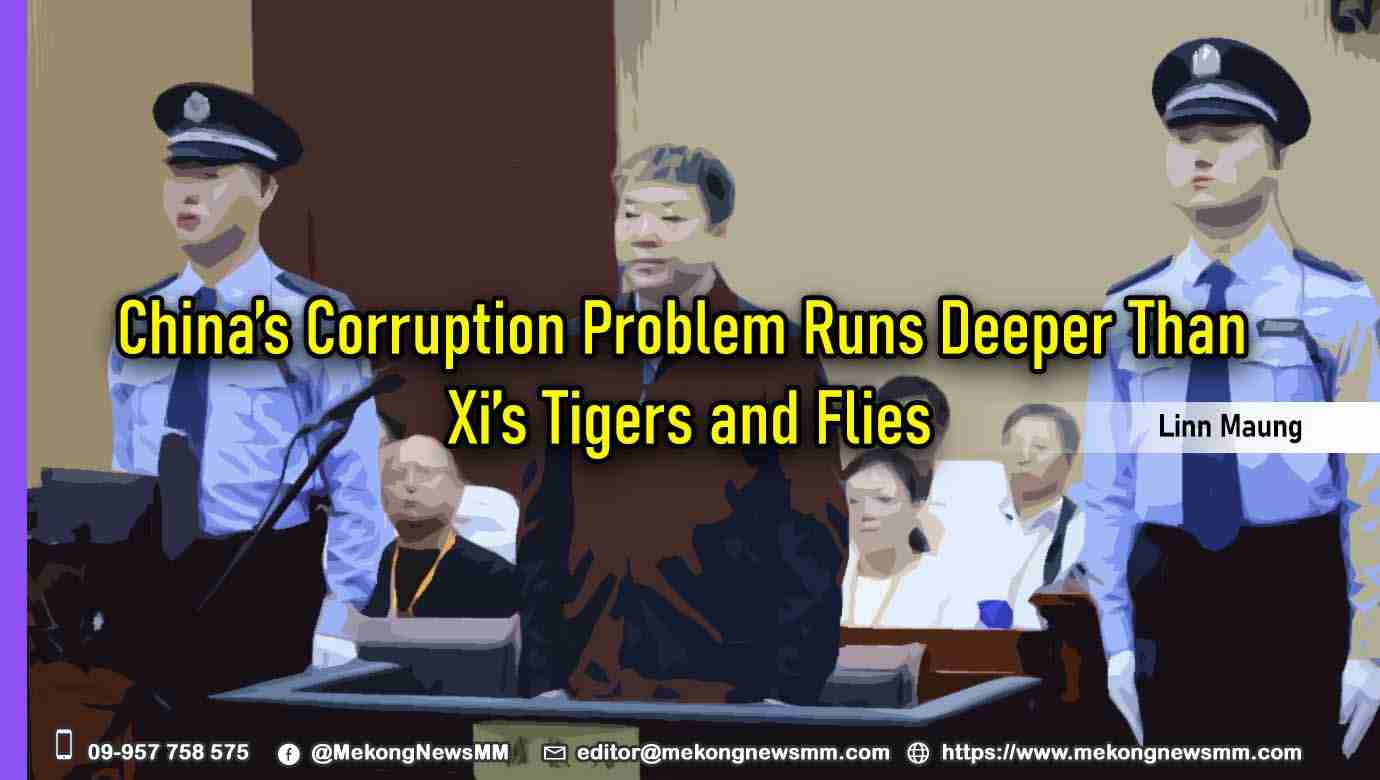
China’s anti-corruption campaign is widening its tentacles. What began as a drive against officials and powerful “tigers” has moved into a more sensitive arena: the private lives and overseas ties of those in public office.
Over the past year, Beijing has quietly expanded scrutiny beyond the long-targeted category of “naked officials” – those whose spouses and children live abroad – to a new group described internally in the Communist Party as “quasi-naked officials”. These are officials whose children reside overseas while their spouses remain in China.
The shift signals a tightening of political discipline as President Xi Jinping presses ahead with a campaign that has already reshaped China’s bureaucracy, state-owned enterprises and military over more than a decade.
For years, “naked officials” have been under suspicion. A 2014 directive by the Communist Party’s powerful personnel arm barred them from promotion or appointment to key leadership roles in party organs, the military and state-owned firms. The logic was clear: family members abroad could become channels for illicit wealth transfers – or leverage points for foreign influence.
Now, according to multiple sources familiar with internal reviews, inspections have broadened. Since early last year, surveys and background checks have been conducted across government bodies and state-owned enterprises to map the overseas connections of senior officials and executives.
The Central Organisation Department – the party’s gatekeeper for appointments – reportedly carried out a nationwide survey in the first half of last year focused on officials in “critical positions”. The emphasis, insiders say, is risk prevention rather than proof of wrongdoing.
Officials whose children study or settle abroad are now subject to heightened monitoring. They must declare relevant information promptly. In sensitive portfolios, some have been reassigned. Others have seen promotions stall.
China’s top disciplinary watchdog, the Central Commission for Discipline Inspection, placed a record 63 senior officials under investigation last year. The numbers underscore that the anti-graft drive remains active, not symbolic.
What is changing is the focus.
The campaign is moving from punishing corruption after the fact to closing perceived loopholes before money leaves the country. Party insiders describe overseas family ties as a critical “link in the chain” of corruption, facilitating the transfer of funds or providing safe havens for illicit gains once they are secured.
In this view, an official’s child born overseas is not merely a personal matter. It becomes a compliance and political reliability issue.
Several recent cases illustrate the consequences. An official was reportedly removed after it emerged that his child held a US green card. In another instance, a director at a ministry-affiliated institute was dismissed for failing to disclose his son’s US residency status. In China’s political system, removal from a senior post often marks the end of a public career.
Failure to disclose such ties to disciplinary authorities carries additional risk. Concealment can trigger a formal investigation and dismissal.
The widening net points to a deeper shift. The anti-corruption drive is no longer only about rooting out graft. It is about reinforcing political discipline, sealing off capital outflows, and reducing perceived foreign exposure within the ruling elite.
By extending scrutiny to “quasi-officials,” Beijing is drawing a firmer line between private family choices and public political trust. Overseas education or residency – once a status marker among elite families – is increasingly treated as a governance risk.
The message is unmistakable: political loyalty and institutional control now outweigh the benefits of global exposure. In the current climate, even indirect overseas ties can shape a cadre’s career trajectory.
China’s anti-corruption campaign, far from winding down, is entering a more intrusive and preventive phase – one that blends graft control, national security and geopolitical caution into a single discipline framework.
#MeKongNews