


~ Linn Maung ~
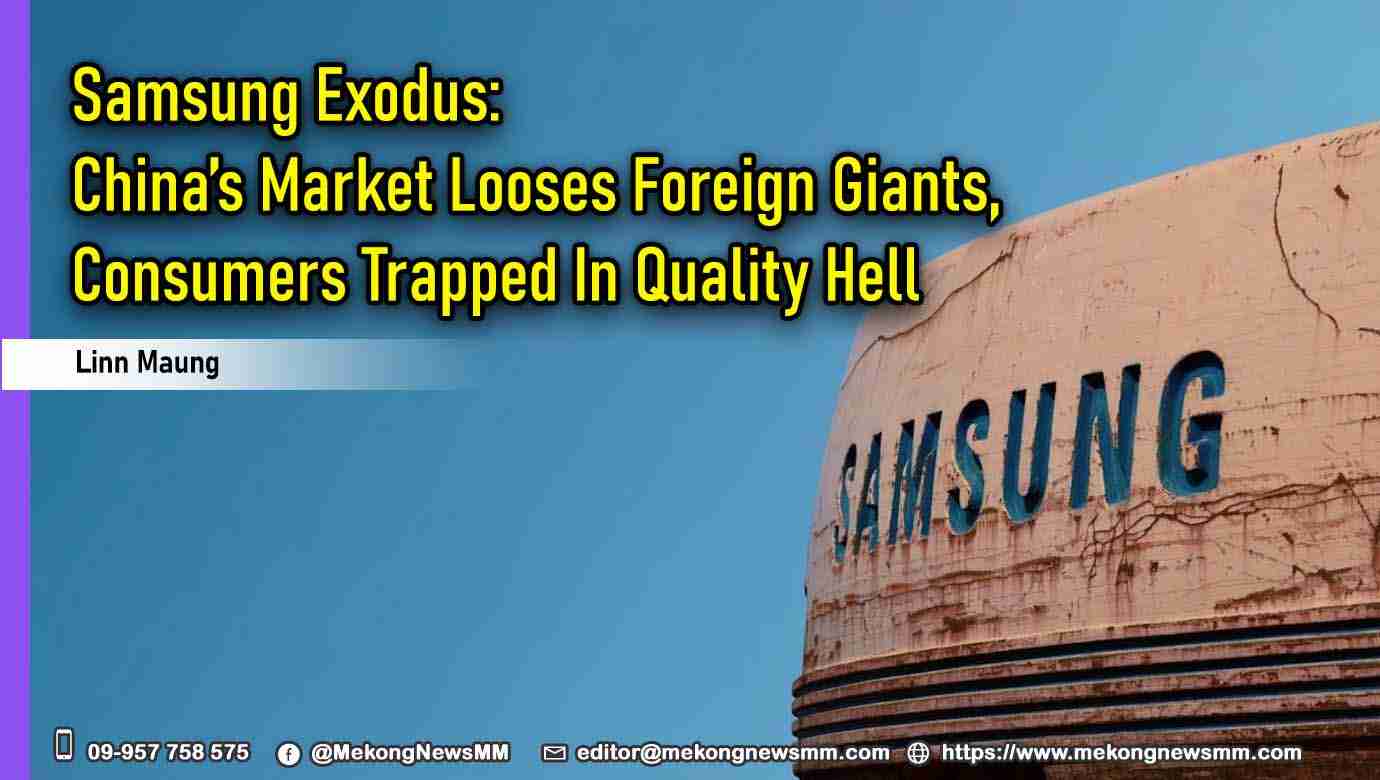
China’s consumer electronics market is undergoing a seismic shift, and the departure of “Samsung” marks a turning point that exposes the cracks in the country’s economic environment. Far from being a failure of foreign brands, Samsung’s withdrawal is a direct consequence of China’s increasingly chaotic business climate. The company, with a market capitalization exceeding $1 trillion and ranking second in Asia behind TSMC, continues to thrive globally. Its exit from China is not about weakness it is about survival in a hostile environment.
Samsung is not alone. Giants like Mitsubishi and Cisco have already left, and more are following. Yet many mainland citizens mistakenly celebrate these exits as victories for domestic brands. The reality is harsher: without strong foreign rivals to act as a counterweight, Chinese consumers are left vulnerable to declining quality, planned obsolescence, and exploitative practices.
Domestic brands are facing mounting criticism for cutting corners. Products often fail the moment warranties expire, forcing consumers into costly repairs or replacements. Reports abound of Xiaomi TVs freezing after minutes of use, refrigerators plagued by ice buildup, and dishwashers with flimsy plastic locks snapping right after warranty periods end. Budget air conditioners have even replaced copper components with aluminium, leading to rapid compressor failures so severe that scrap collectors refuse to buy them. Consumers claim the failure rate of certain domestic ecosystems is nearly 100%, turning everyday appliances into nightmares.
This crisis extends beyond electronics. The domestic auto industry is under fire, with models like BYD criticized for fragile chassis designs that break in minor collisions and repair processes so complex they drain household budgets. The slogan “far ahead” has become a satirical meme, as shortened research cycles lead to plummeting quality. Families who invested heavily in domestic brands now face leaking machines, denied warranty claims, and replacements every two to three years a stark contrast to the durable goods of the past that lasted decades.
Manufacturers are accused of intentionally transforming durable goods into fast-moving consumer products to maximize sales. In some regions, residents are even forced to upgrade stoves before gas deliveries are allowed, regardless of whether their old equipment still functions. This coercive cycle exhausts consumers financially and emotionally, eroding trust in domestic brands.
The exodus of foreign enterprises reveals a deeper truth: China’s business environment is no longer suitable for sustainable growth. Without international competition, domestic brands are not improving they are regressing. Citizens are forced to endure inferior products at inflated prices, while foreign companies, ironically, had been the true protectors of consumer rights. Their presence ensured balance, restraint, and accountability in the marketplace.
China’s isolationist trajectory is dangerous. When a market pushes itself into isolation, the greatest loss is not felt by multinational corporations but by ordinary people. Foreign giants like Samsung, Canon, and Mitsubishi thrive elsewhere, but Chinese consumers are left trapped in what critics call “quality hell.”
The broader implications are alarming. A massive market requires equilibrium, and when that balance is broken, the interests of the masses are compromised. Domestic brands, shielded from competition, exploit consumers with poor quality and planned obsolescence. This is not progress it is regression. The CCP’s failure to maintain a fair and open business environment has created a vicious cycle where citizens pay more for less, while foreign companies walk away unscathed.
Samsung’s departure should serve as a wake-up call. It is not a victory for domestic brands but a warning of systemic collapse. The narrative that foreign exits represent national strength is dangerously misleading. In reality, these exits expose the fragility of China’s consumer market and the failure of domestic brands to rise to global standards.
China’s consumers deserve better. They deserve durable goods, fair warranties, and genuine innovation. Instead, they are trapped in a marketplace where foreign giants flee, domestic brands exploit, and quality declines. The exodus of Samsung and others is not just about economics it is about the erosion of consumer rights, the collapse of trust, and the failure of policy.
The endgame is clear: without foreign competition, China risks becoming a marketplace of broken promises and inferior products. The celebration of foreign exits is misplaced. The true tragedy lies in the everyday lives of citizens forced to endure appliances that fail, cars that break, and warranties that vanish.
Samsung’s exodus is not a story of defeat. It is a story of survival, of a global giant refusing to be trapped in chaos. The real losers are the consumers, left behind in a market that has lost its balance, its credibility, and its fairness.
References
https://www.ft.com/samsung-exits-china-market
https://www.reuters.com/business/samsung-china-exodus
https://www.scmp.com/business/china-domestic-brands-quality
https://www.bloomberg.com/china-consumer-market-collapse
https://www.standard.hk/samsung-china-market-exit
https://www.forbes.com/companies-exiting-china-2026
https://www.business-standard.com/china-consumer-electronics-collapse
https://www.msa-advisory.com/companies-leaving-china-2026
#MeKongNews