

~ Linn Maung ~
Within the evolving landscape of non-traditional security, Humanitarian Assistance and Disaster Relief (HADR) operations have emerged not only as tools of goodwill but also as subtle instruments of geopolitical influence. With natural disasters becoming more frequent and severe across South Asia, the actors that respond are increasingly shaping regional political dynamics. Nowhere is this more evident than in the People’s Republic of China’s approach to HADR, which reflects a growing convergence between humanitarianism and strategic statecraft.
The case of Myanmar’s recent earthquake offers a striking illustration. In March 2025, following a devastating earthquake in the country’s northern and central regions, Beijing was among the first to dispatch relief teams, including engineers, medical personnel, and supplies. Chinese state media framed this operation as a reflection of its “community of shared destiny” with its neighbourhood. However, behind this façade of altruism, tensions soon emerged between the Chinese rescue units and the Myanmar military junta. Recent Reports indicated that Myanmar’s military fired upon a Chinese Red Cross aid convoy, alleging that the convoy entered a conflict zone without proper coordination. This incident represented one of many that revealed the complex dynamics at play when humanitarian efforts intersect with sensitive political and military contexts.
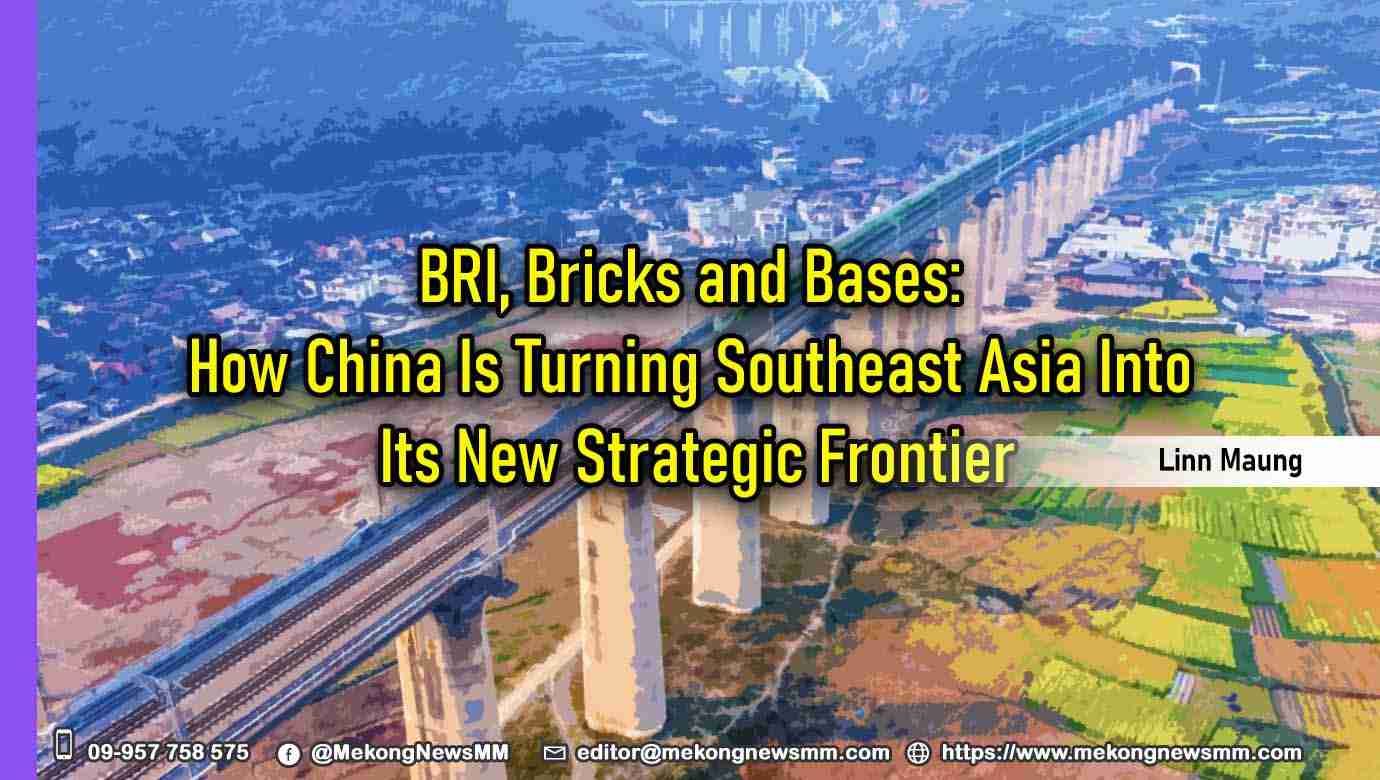
What complicates the matter further is the concurrent presence of Chinese firms and affiliated entities in these regions under the Belt and Road Initiative (BRI) umbrella. This overlap of humanitarian aid and strategic economic interests, particularly near infrastructure projects raises legitimate questions about the motives underpinning China’s rapid deployment in neighbouring countries. In Myanmar, many of the areas affected by natural disasters, particularly in Kachin and Shan states, are also sites of ongoing Chinese infrastructure development, including energy pipelines, hydropower stations, and logistical corridors linking Yunnan to the Indian Ocean. The proximity of Chinese HADR operations to these economically strategic zones blurs the lines between humanitarian assistance and geoeconomic positioning. Rather than being purely needs-based, Beijing’s disaster relief efforts appear disproportionately focused on regions central to its long-term connectivity and resource-security objectives. For a regime that is both politically isolated and militarily overstretched, the spectre of an external actor using humanitarian corridors to deepen influence or gather intelligence is a tangible concern. As a result, efforts to coordinate with Chinese agencies are becoming more bureaucratically rigid, even as the junta publicly thanks Beijing for its support.
The case of Myanmar is however not an isolated incident. A similar pattern was observed in Nepal during the 2015 earthquake, when Chinese rescue and medical teams were lauded for their speed but faced challenges in coordination. According to international NGOs operating in the region, Chinese units were reluctant to coordinate with multilateral teams and reportedly restricted access to certain areas, especially near the northern border. Officials, speaking off-record, described the operational style as “parallel governance,” with Chinese personnel seemingly asserting de facto authority over zones of interest. While China cited security concerns and logistical prudence, the optics, and implications, of these actions certainly did not go unnoticed.
Taken together, these cases suggest a consistent strategy: China’s HADR operations are deployed not just for benevolent outreach but also as instruments of influence, often operating in border regions, conflict-prone areas, and strategic corridors where state sovereignty is either weak or contested. Therefore, what links the Nepal and Myanmar cases is not overt coercion, but a careful orchestration of humanitarianism to serve strategic ends. By being ‘first on the ground’ and tightly managing the aid narrative, Beijing often secures both symbolic capital and on-the-ground influence, particularly in fragile or strategically important border regions. HADR, in this framing, becomes not just a means of assistance but also a mechanism of presence.
As Chinese white papers on military-civil fusion and foreign policy increasingly stress “active participation in global governance,” HADR is bound to become a vector through which Beijing signals capability, responsibility, and regional indispensability, often on its own terms. Crucially, China’s model differs from that of traditional donor states or multilateral organizations. It is bilateral, highly securitized and often opaque.
Critics may argue that these practices undermine the neutrality and universality of humanitarian principles. Yet Beijing’s calculus is rooted in a different framework, one where aid and influence are co-constitutive, and where sovereignty is selectively interpreted based on strategic utility. This makes China’s HADR operations particularly challenging for smaller states, who must navigate the dual imperatives of accepting assistance and safeguarding autonomy.
The broader question, then, is not whether China’s HADR model is effective, clearly, it often is; but whether it respects the principles of partnership and sovereignty that undergird international disaster response norms. In Myanmar and Nepal, the answer remains ambiguous. As China deepens its regional engagements under the guise of humanitarian solidarity, recipient states and regional institutions must develop sharper protocols, more transparent coordination frameworks, and multilateral norms that ensure HADR does not become China’s Trojan horse for strategic encroachment.
#MeKongNews