

~ Linn Maung ~
China is getting into fresh problems in Myanmar; trying to protect its Belt and Road Initiative investments in a country torn by a civil war between the ruling military junta and a large number of ethnic militia groups. The proposal of Beijing to set up a Joint Security Company with Chinese and Burmese participation for the protection of Chinese investments has met with resistance from the common people of Myanmar as interference into the sovereignty of their country.
The Chinese strategy to support the military junta after the coup in 2021 to gain a foothold when the whole world was shunning the junta has backfired. Now the plan to set up a joint security company has further antagonized the people of Myanmar against Beijing. Resistance against the Chinese proposal from among the common people of Myanmar is crystallizing. Online comments over the Chinese proposal express the apprehension of the potential arrival of Chinese troops in Myanmar through the proposed security company.
When the Chinese authorities put the commander of the rebel force Myanmar National Democratic Alliance Army Peng Daxun under house arrest in Kunming in China last October to put pressure on the MNDAA to withdraw from Lashio, bordering the Yunnan province of China and the conduit through which Chinese investments flow into Myanmar, the Chinese consulate in Myanmar’s northern city of Mandalay came under a grenade attack.
At Kyauk Phyu in the Rakhine state on the western coast of Myanmar where China is building a port, a proposed railway and twin oil and gas pipelines to connect the Yunnan province of China with the port, all private banks went on a prolonged strike last November; bringing cash flow to a complete halt. The Arakan Army, an armed ethnic group and a member of the Three Brotherhood Alliance, controls the area around Kyauk Phyu.
“The China-Myanmar Joint Security Company was formed in early November for the protection of the Kyauk Phyu SEZ and Chinese investments and special projects. Chinese security forces and technicians are a part of this security force,” a report in Mizzima News says.
Armed groups have seized a Chinese nickel processing plant in the Sagaing region and a cement factory built with Chinese assistance in Mandalay. Troops of the military junta guarding take-off stations for the oil and gas pipelines face frequent attacks.
The Chinese proposal was mooted last August. This Joint Security Company is far from a conventional private security agency arranging the protection of factories and projects but amounts to military intervention by China through the backdoor. In effect, Chinese soldiers will be present in Myanmar along with arms and warlike stores, capable of taking on the ethnic militia groups; though without the uniform of the Peoples’ Liberation Army of China.
This is not only a clear violation of the sovereign rights of Myanmar but also an issue of concern for the neighbouring countries of India, Bangladesh and Thailand. It will amount to the presence of the Chinese army close to their borders. India is building the Kaladan Multimodal Transport Project also in the Rakhine state where China is deploying its troops.
The military junta has formed a working committee to prepare a Memorandum of Understanding for the establishment of the security company. Jason Tower of the United States Institute of Peace has been quoted in The Irrawaddy saying China wants full control and the ability to directly secure its geostrategic investments in Myanmar without depending on the junta.
“What the Chinese are asking for seems similar to the ‘island of security’ that they aimed to establish around the Myitsone dam in 2009 after fighting broke out over hydropower projects in Kachin state. That would have involved Chinese security directly controlling access to territories around the project,” he says.
The constitution of Myanmar of 2008 prohibits the deployment of foreign troops on its soil. The framing of the initiative as a Chinese “company” in a joint venture is nothing but a clever move to silence accusations of a foreign military intervention. By structuring the company as private and partially Burmese, Beijing can deny its direct involvement while from behind the bamboo curtains direct the security forces to carry out foreign policy objectives of China from Burmese soil.
Beijing has been helping the oppressive rule of the military junta with sustained financial and military support, including the shipment of weapons and aircraft, but now it lacks the confidence that the military junta will be able to protect its investments and personnel in Myanmar.
China already has four private security companies operating in Myanmar, in areas where Beijing has significant strategic and economic interests. These security companies primarily focus on safeguarding infrastructure projects, Chinese personnel and investments linked to the Belt and Road Initiative.
The proposed Joint Security Company will, however, be a joint venture with the military junta in Myanmar, introducing a new dynamic in the whole plan. This company will facilitate arms shipment and deliveries to the military junta. With the junta having a stake in it, the new company will operate with fewer restrictions and have in its ranks heavily armed personnel. It may take a more militarized role and an active part in fighting the pro-democracy forces.
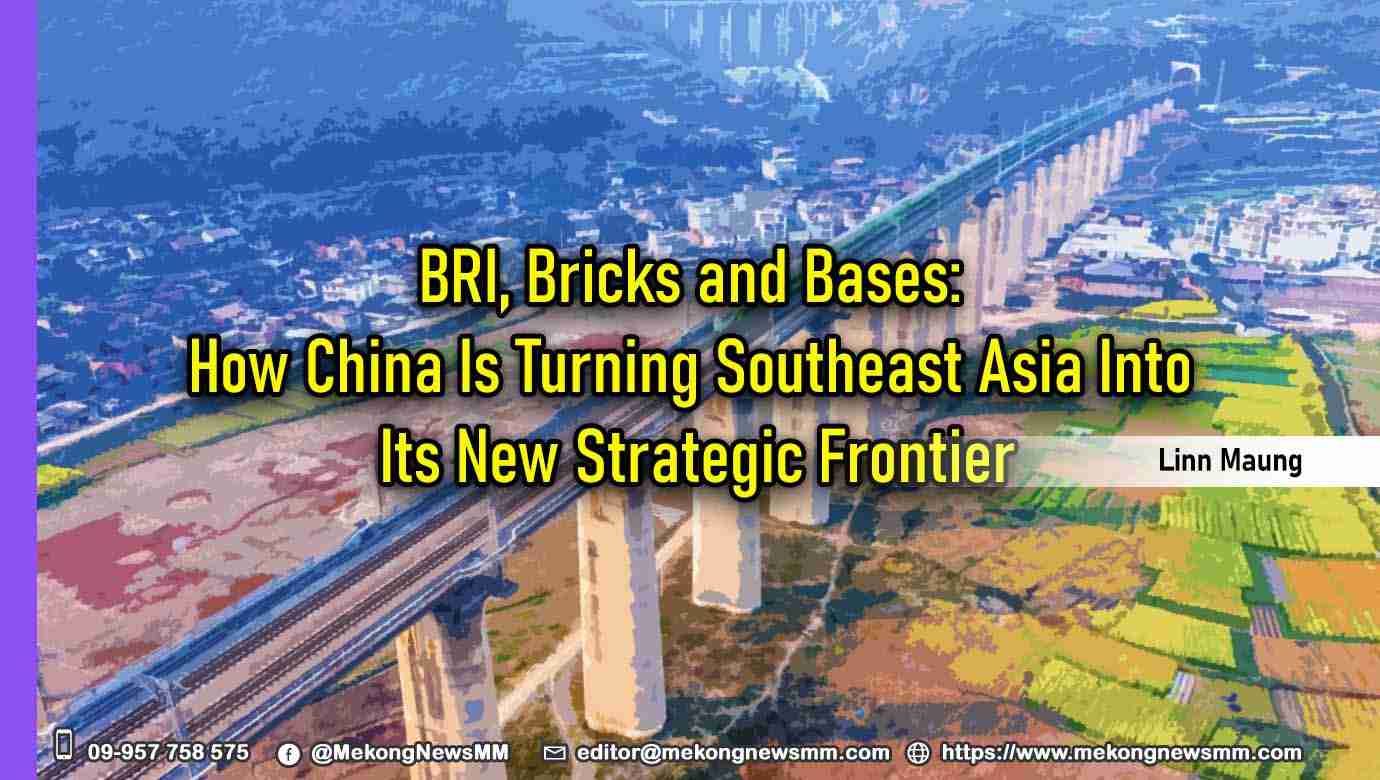
With its insatiable greed to establish domination over the world, the Chinese Communist Party is investing in projects in disturbed countries where the governments are unable to arrange protection for these. Through Myanmar which has been torn by unrest and civil war for a long time, Beijing is building the China Myanmar Economic Corridor (CMEC) to reach the warm waters of the Indian Ocean. The CMEC includes highways, economic zones, a railway and oil and gas pipelines that connect Kunming in the Yunnan province of China with Kyauk Phyu on the western coast of Myanmar.
To protect its BRI investments, China is running with the hare and hunting with the hound in Myanmar. Since the coup of 2021, Beijing has deepened engagement with the military regime. Much of its investments being located in the border regions of Myanmar controlled by armies of ethnic groups, China has periodically helped the rebel groups too. In 2023, the rebel groups launched “Operation 1027,” a joint offensive, with the blessings of Beijing. Yet, China cannot afford to burn the bridges with the military junta which still controls the heartland of Myanmar.
The coup in 2021 came as an unwelcome shock to Beijing as Myanmar was thrown into disarray when China was planning to expand its BRI investments in Myanmar. Now the Chinese plan for an armed intervention will entangle Beijing further in the prolonged civil war in Myanmar where Chinese projects and establishments had come under attack soon after the coup.
#MeKongNews