

~ Linn Maung ~
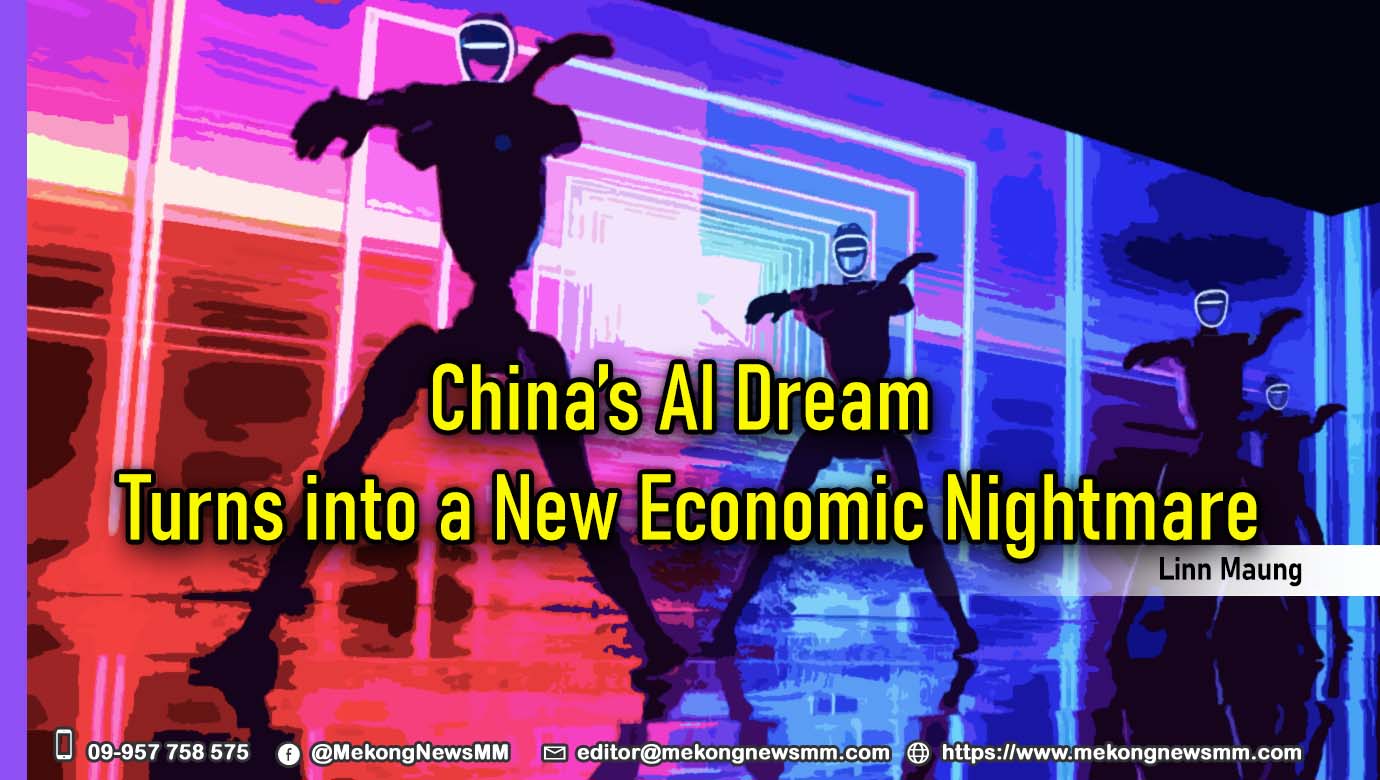
For years, Beijing projected artificial intelligence as the next pillar of China’s rise. AI was supposed to compensate for the collapse of real estate, revive investor confidence, propel industrial modernisation, and eventually challenge American technological dominance. Instead, China is now confronting an uncomfortable reality: the AI boom that was marketed as a symbol of national strength is rapidly showing signs of becoming another source of economic vulnerability.
The warning signs are no longer hidden. China’s AI-heavy STAR50 index, which tracks many of the country’s leading semiconductor and AI-related firms, has plunged about 40% in less than four months, wiping out approximately US$480 billion in market value. Meanwhile, China’s broader CSI300 index has fallen about 20% from its June highs. According to Goldman Sachs, AI-related stocks accounted for 42% of China’s market capitalisation and 57% of market turnover, making the AI correction far more consequential than an ordinary market decline.
The collapse raises an important question. Was China’s AI boom built on genuine innovation and sustainable profitability, or was it another state-fuelled bubble searching for an economic miracle?
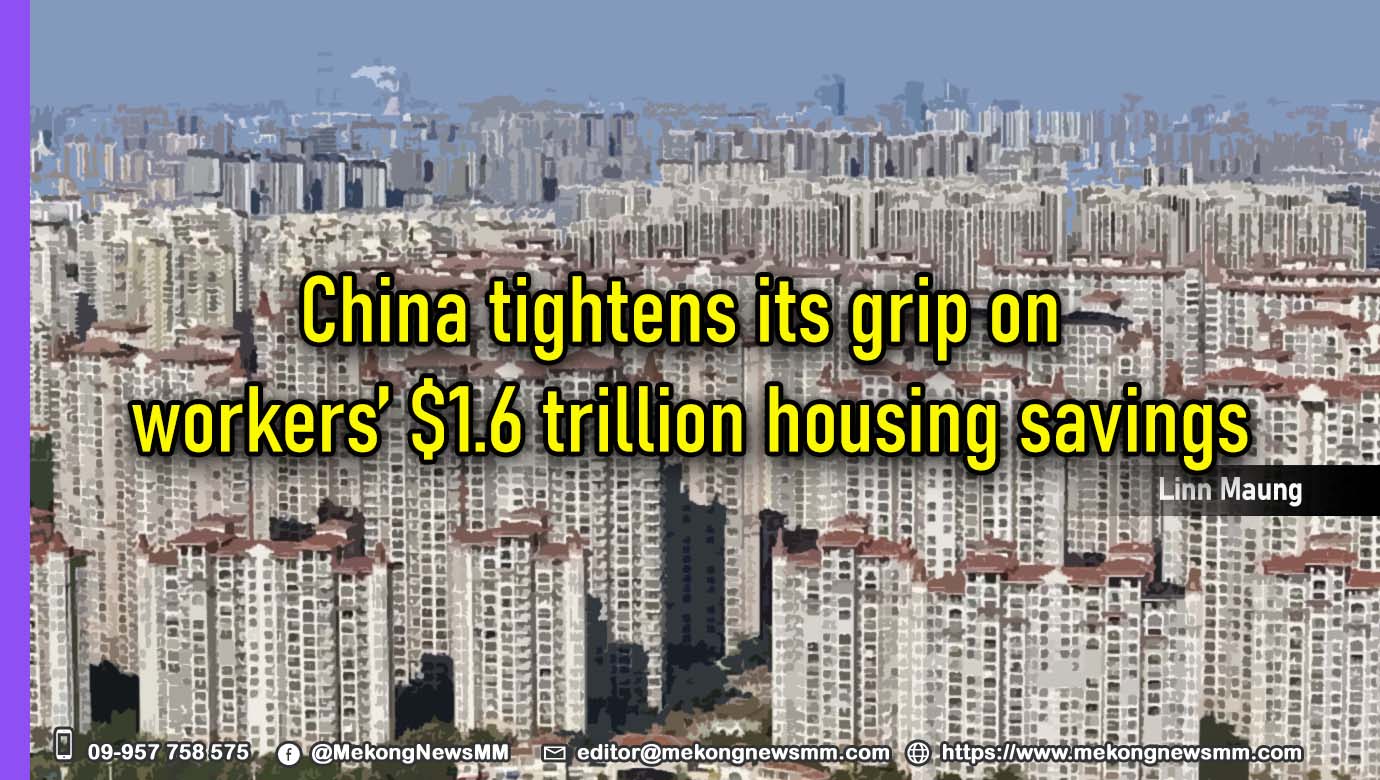
China’s economic troubles did not begin with AI. The country’s first major shock came from the property sector, which once accounted for a substantial share of economic activity and household wealth. The Evergrande collapse became the symbol of a wider crisis that remains unresolved. Reuters recently reported that China’s property downturn continues to weigh heavily on growth, with millions of unfinished homes still scattered across the country and property investment expected to shrink by around 20% this year.
When real estate began to unravel, Beijing shifted attention toward advanced manufacturing, electric vehicles, semiconductors and artificial intelligence. The message was simple: China’s old growth model was fading, but a new technology-driven model would deliver prosperity.
Yet manufacturing itself is now showing signs of strain. Official data released at the end of October showed China’s manufacturing PMI fell to 49.3, indicating contraction and reflecting weak domestic demand and softer export orders. This marked the third contraction in four months and highlighted the continuing fragility of the Chinese economy despite heavy state intervention.
Against this backdrop, AI was supposed to be the success story. Instead, investors are discovering that technological ambition does not automatically translate into profits. The AI rally pushed many Chinese technology stocks to extraordinary valuations. Some firms traded at levels disconnected from commercial reality.
Investors poured money into robotics, chips and AI platforms under the belief that government backing would ensure long-term success. Companies such as Unitree became retail-investor favourites, with its shares reportedly oversubscribed thousands of times before listing. Yet even these market darlings have suffered sharp declines as enthusiasm collided with economic realities.
The deeper concern is not merely the stock market correction. It is the growing gap between state planning and market outcomes. China’s leadership has repeatedly demonstrated its ability to mobilise capital and direct investment. What it has struggled to demonstrate is an equal ability to manage the consequences when speculative excess emerges.
The property bubble expanded under official encouragement. The AI boom was championed as a strategic national priority. In both cases, ordinary investors interpreted government support as an implicit guarantee, that assumption is now proving costly.
Equally troubling is the growing concerns surrounding AI governance, cybersecurity and technological reliability. China has invested billions of dollars in AI development, yet the country continues to face significant challenges related to data security, cyber intrusions, intellectual property disputes and AI reliability. As AI systems become more deeply integrated into finance, government administration, manufacturing and defence applications, even minor failures can generate disproportionate consequences.
The challenge for Beijing is that AI innovation thrives on openness, experimentation and transparency, while China’s political system prioritises centralised control, censorship and information management. These competing objectives create structural tensions. The government can direct investment flows, but controlling AI malfunctions, algorithmic failures, cybersecurity vulnerabilities and potential misuse is a far more complicated task.
Meanwhile, China’s ambition to overtake the United States in the AI race faces additional obstacles. American firms continue to dominate critical areas including advanced semiconductors, cutting-edge AI models, cloud infrastructure and venture capital ecosystems. Export restrictions, technology controls and growing scrutiny of Chinese technology firms by Western governments have added further pressure to Beijing’s AI strategy. Reuters noted that concerns over restrictions on Chinese equipment and exports were among the factors contributing to the recent sell-off.
None of this means China will disappear as an AI power. Far from it. The country remains one of the world’s largest investors in artificial intelligence, robotics and advanced manufacturing. However, the events of recent months expose a difficult truth: government-directed technological ambition cannot permanently override economic fundamentals.
China’s economy today resembles a nation moving from one shock to another. First came the property collapse. Then manufacturing weakness became harder to ignore. Now the AI sector, once promoted as the solution to every economic challenge, is confronting its own reckoning.
For Beijing, the greatest risk is not simply losing hundreds of billions of dollars in market value. The greater danger is the erosion of confidence among investors, entrepreneurs and households who were repeatedly encouraged to believe that each new strategic sector would become the engine of China’s next economic miracle.
The AI dream has not died. But the illusion that state direction alone can guarantee technological and economic success is facing its most serious test yet.
References:
https://www.reuters.com/world/china/china-ai-bubble-has-already-burst-2026-10-26/
https://www.reuters.com/world/asia-pacific/chinas-october-factory-activity-contracts-fastest-pace-3-months-pmi-survey-shows-2026-10-31/
https://www.reuters.com/world/china/chinas-property-crisis-grinds-after-evergrande-sentencing-2026-08-23/
https://www.reuters.com/world/asia-pacific/china-home-prices-seen-falling-slightly-less-this-year-property-investment-slump-2026-08-28/
https://www.theguardian.com/world/2026/oct/27/chinese-markets-lose-trillions-ai-race-beijing
#MeKongNews