~ Linn Maung ~
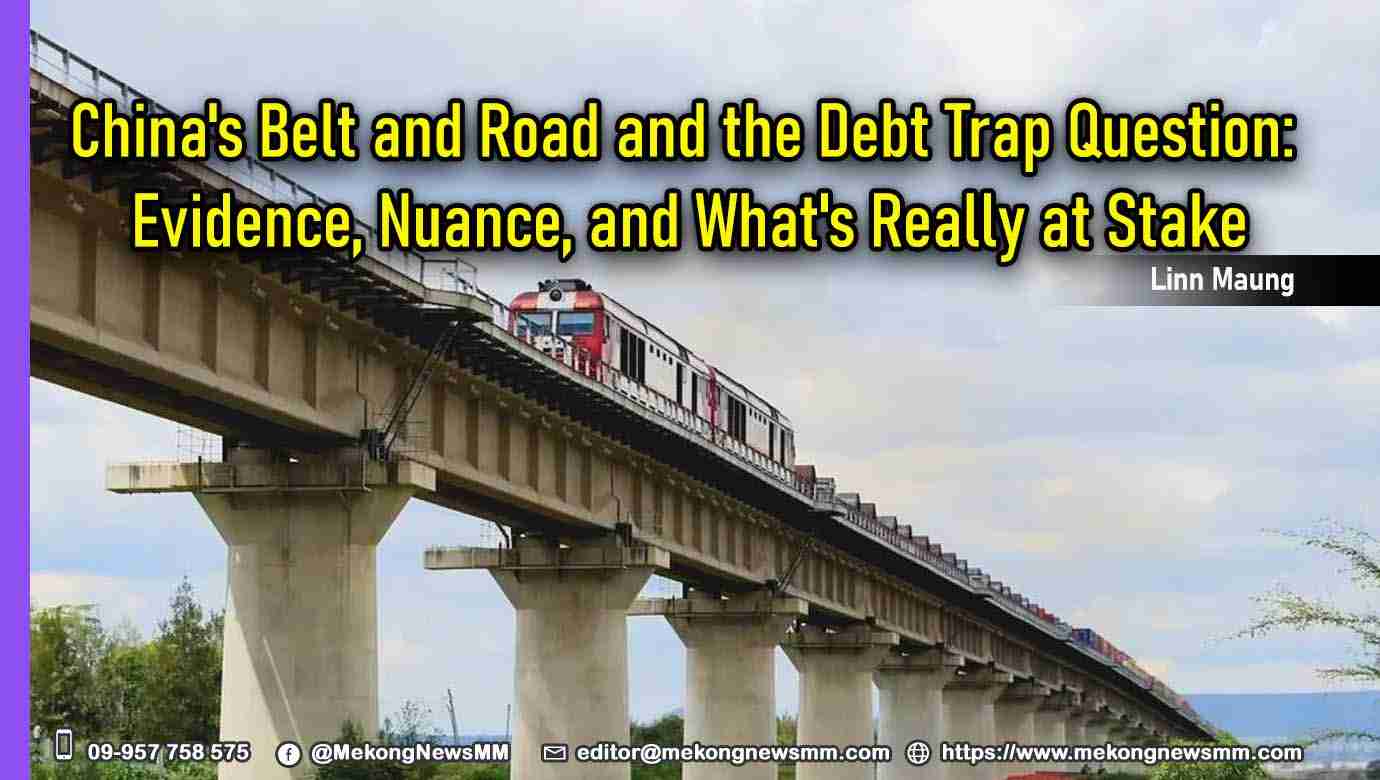
Few geopolitical concepts have generated as much heat, and as little light, as “debt trap diplomacy,” the accusation that China deliberately over-lends to developing nations through its Belt and Road Initiative (BRI), waits for default, and seizes strategic assets as repayment. As of 2025, developing countries owe a record $35 billion in debt repayments to China, with around $22 billion of that amount falling on 75 of the world’s poorest nations, putting health, education and poverty reduction spending directly at risk.
The question that has plagued this debate since 2017 is whether China designed these outcomes deliberately, through what critic’s call “debt trap diplomacy,” or whether the distress is the collateral damage of poorly managed ambition. The honest answer is that the distinction matters less than the structural outcome. By 2022, 60% of China’s overseas lending portfolio was owed by borrowers in some form of distress, whether through payment arrears, outright default, or restructuring. China’s era of high-risk sovereign lending has effectively come to a halt, replaced by a more cautious and defensive posture in which bailouts are selectively extended to middle-income countries with large exposures, while poorer countries receive limited relief without fresh funding. In other words, the countries with the least capacity to absorb shocks are now being left to absorb them.
What the Evidence Actually Shows
Pakistan is the most viscerally instructive case, and also the most current. The China-Pakistan Economic Corridor, once announced as a $62 billion transformative project, has become a financial millstone around Islamabad’s neck that tightens with every passing quarter. Pakistan’s energy sector under CPEC tells a story of compounding failure; the country agreed to pay Chinese power producers in foreign currency at guaranteed capacity payments regardless of whether electricity was actually consumed, a structurally irrational arrangement that has predictably produced a catastrophic circular debt spiral. The relationship between the original loan terms, the currency mismatch, and the fiscal incapacity of the Pakistani state was not an accident of hindsight. Economists flagged these risks at inception, and they were ignored in the rush to sign. This pattern of cost overruns and subsequent renegotiations is not incidental to BRI’s model; it is a recurring feature of it.
What Pakistan revealing about Beijing’s contentious lending policies was eventually confirmed in Laos. The China-Laos Railway, a $6 billion project presented as the infrastructure centrepiece that would convert a landlocked country into a “land-linked” hub, has instead deepened the country’s dependency to a degree that now threatens its sovereign control over critical assets. Laos owes half of its total public and publicly guaranteed debt to China, and debt service payments to Beijing have been suspended or deferred since 2020 in an arrangement that remains unresolved as of 2024, leaving Laos in a permanently precarious state of managed insolvency. The deeper indignity is that the railway itself does not principally serve Lao interests. The goods travelling the line flow predominantly from China southward into Laos, not the other way around, which means the infrastructure serves Chinese trade logistics rather than Lao economic development. Meanwhile, the strategic price of the debt has already been paid.
In 2024, the China Southern Power Grid Yunnan International Company assumed a 90% stake in Laos’s national electricity transmission company through a 25-year lease. This is not a dramatic port seizure of the kind that dominates Western headlines. It is something quieter with the incremental transfer of a nation’s energy sovereignty in exchange for breathing room on a debt the country cannot repay.
Indonesia adds a further dimension that is both recent and telling. The Indonesian government has begun debt restructuring talks with Beijing as the Whoosh high-speed rail project continues to post heavy losses. Construction costs ballooned from $5.6 billion to $7.4 billion, and annual interest payments now reach approximately $120 million. In 2015, Indonesia rejected Japan’s offer of a 0.1% interest loan with a sovereign guarantee in favour of China’s 2% interest loan that required no government backing, a choice that now defines the country’s fiscal exposure on this project. Thailand and Malaysia have both moved to reduce their exposure to Chinese debt through renegotiation.
Why the “It’s Not a Trap” Argument Doesn’t Hold
At this point, the debt-trap sceptics will rightly intervene. Scholars have argued that many BRI borrowers actively sought Chinese financing when Western and multilateral alternatives came loaded with governance conditionality that recipient governments found politically unacceptable. The Rhodium consulting group examined 38 Chinese debt renegotiations with 24 developing countries and found that many outcomes were resolved in favour of the borrower, with loan extensions, cheaper financing, and debt forgiveness as the most frequent results. This is a serious finding and it complicates the more melodramatic versions of the debt-trap narrative. Beijing does not uniformly seize assets on default. It often restructures, defers, and extends. The problem is that these extensions rarely resolve the underlying solvency problem. Debt restructurings under China typically involve maturity or grace period extensions but no face-value reductions or improvements in interest rates, meaning the debt stock remains intact while the crisis is merely deferred. Kicking the can generates political stability in the short run and structural dependency in the long run, which is arguably more useful to Beijing than an asset seizure that would generate international outrage.
The legal architecture of BRI loans reinforces this point. The legal mechanisms used in BRI deals, including collateralization of future earnings, confidentiality clauses, and arbitration in foreign jurisdictions, can entrench dependency and limit fiscal flexibility. Debt forgiveness is rare, contract transparency is almost non-existent, and restructuring tends to be short-term. When Zambia defaulted during the pandemic with roughly a third of its external debt owed to Chinese creditors, the lack of transparency surrounding those loans complicated negotiations with other lenders, delaying debt restructuring efforts and prolonging the crisis. The opacity of Chinese lending does not only harm borrowers; it destabilises the entire multilateral architecture through which debt crises are resolved, because coordinated restructuring requires information that China structurally withholds.
The broader picture that emerges from all of this is one that refuses simple narratives. China did not design the BRI as a precision instrument of geopolitical coercion. But it did design it with confidentiality clauses, foreign-currency denominated repayments, commercially driven interest rates, and an institutional aversion to the kind of transparent multilateral debt resolution that would protect the most vulnerable borrowers. With more than half of the world’s most vulnerable countries now classified by the IMF as being either at risk of or already experiencing debt distress, coinciding precisely with scheduled repayments to China. Whether that outcome was intended or stumbled into, it is the world that developing nations now have to live in, and that is what makes the BRI’s debt story so difficult to dismiss and so urgent to confront.
#MeKongNews